Growing Pains vs. Something More: Red Flags Parrish Parents Should Know
Few things are more unsettling as a parent than being woken up by a crying child who says their legs hurt — especially when there's no injury, no fever, and nothing obviously wrong. In most cases, this is what's commonly called "growing pains," a pattern we see often in our pediatric chiropractic practice and one we connect closely to how a child's spine and nervous system are keeping up with an active, growing body. It's a question we hear often from families in Parrish, Lakewood Ranch, Sarasota, and Bradenton, and because the term gets used so casually, it's worth knowing exactly what typical growing pains look like, which symptoms mean it's time to see a pediatrician, and how pediatric chiropractic care fits into the picture.
This guide breaks down the classic pattern of childhood growing pains, the red flags that call for a pediatrician's evaluation, and how nervous system tension from an active, growing body factors in — plus what parents in Parrish, Lakewood Ranch, Sarasota, and Bradenton can do to help their child feel more comfortable.
Key Summary
• Growing pains typically affect children between about 3 and 12 years old, most often in the calves, shins, thighs, or behind the knees.
• Classic growing pains happen in the late afternoon or evening and at night, affect both legs, and are gone by morning, with the child feeling completely normal during the day.
• At Pinnacle Chiropractic, we see growing pains as closely tied to how well a child's nervous system and spine are keeping up with the tension that builds from an active, rapidly growing body — not a mystery to simply wait out.
• Red flags that point to something other than typical growing pains include pain on only one side, joint swelling or redness, limping, fever, morning pain, or pain that limits daily activity — these call for a pediatrician's evaluation, not chiropractic care.
• Gentle pediatric chiropractic adjustments are designed to support healthy spinal and nervous system function, helping release the muscular tension that builds up from a day of running, jumping, and climbing.
• Comfort measures like massage, stretching, and warmth help in the moment, and work well alongside regular chiropractic care as part of an ongoing plan.
What Are Growing Pains?
Growing pains are a common pattern of aching or throbbing discomfort, usually in the legs, that affects a large percentage of children at some point during childhood. They tend to appear in two age windows: early childhood (around ages 3–5) and again around the pre-teen years (roughly 8–12), though they can happen at other ages too.
Despite the name, growing pains aren't actually caused by the physical process of bones lengthening — growth itself isn't painful. At Pinnacle Chiropractic, we see it differently than a simple unexplained mystery: an active, growing child's spine and nervous system are under real physical demand every day, from running and jumping to climbing and playing. When tension builds up in the muscles, joints, and spine surrounding a fast-growing skeleton faster than a child's body can release it, that tension often shows up as the aching, throbbing discomfort parents describe as growing pains.
Some families also explore the role of magnesium in easing growing pains as a complementary comfort measure — always check with your pediatrician before starting any supplement.
What Typical Growing Pains Look Like
• Location: Usually in the front of the thighs, calves, shins, or behind the knees — and almost always in both legs, even if one side hurts more on a given night.
• Timing: Late afternoon, evening, or during the night, often waking a child from sleep. Pain that's present first thing in the morning is not typical of growing pains.
• Pattern: Comes and goes — a child might have pain several nights in a row, then none for weeks or months.
• No lasting effects: Despite significant discomfort at night, a child with typical growing pains feels fine the next day, walks normally, and has no swelling, redness, or tenderness to the touch during the day.
• No single cause: There's usually no specific injury tied to the pain, though an especially active day is a common trigger.
Because growing pains build up after especially active days, this is exactly the kind of tension pediatric chiropractic care is designed to address — supporting a child's spine and nervous system so their body can better keep up with the physical demands of an active, growing childhood.
Red Flags: When It Might Be Something More
Growing pains are a "diagnosis of exclusion," which means a pediatrician typically arrives at it by ruling out other explanations rather than confirming it directly. The following symptoms fall outside the typical growing-pains pattern and are worth bringing to your pediatrician:
• Pain in only one leg, rather than both
• Swelling, redness, or warmth around a joint
• Limping, or a noticeable change in how your child walks
• Pain that continues into the morning or is present throughout the day, not just evenings and nights
• Fever alongside leg pain
• Pain following a specific injury or fall
• Pain in a joint itself rather than the muscles between joints
• Unexplained fatigue, weight loss, rash, or loss of appetite alongside the leg pain
• Pain severe enough to significantly limit play or activity during the day
None of these symptoms mean something serious is definitely happening, but they're the signals pediatricians use to decide whether further evaluation — sometimes including bloodwork or imaging — makes sense to rule out conditions like an infection, an old or hidden fracture, or an inflammatory joint condition. These red flags call for your pediatrician, not chiropractic care.
What Parents Can Do
• Have your child evaluated by a pediatric chiropractor, especially if growing pains are frequent — releasing tension in the spine and nervous system is often exactly what helps a child's body handle an active day more comfortably.
• Gentle massage of the affected muscles often provides real, if temporary, relief.
• Stretching the legs, especially calves and hamstrings, during the day may help reduce how often nighttime pain occurs.
• A warm bath or heating pad before bed can ease muscle tension.
• Comfort and reassurance matter — growing pains can be genuinely uncomfortable, even though they aren't dangerous, and a scared or upset child benefits from calm support.
• Track the pattern in a simple note on your phone — which leg, what time, how long it lasted — so you have real information to share with your pediatrician if the pattern changes or continues.
• Involve your pediatrician if pain is frequent, intense, or if you notice any of the red flags above.
• You can also read more in our related article, Empowering Parents: Alleviating Children's Growing Pains.
The Nervous System Connection
A child's nervous system is directly responsible for how pain signals are processed and how the body recovers from a day of physical activity. At Pinnacle Chiropractic, we see growing pains as closely connected to how well a child's spine and nervous system are regulating that tension — when muscular tension builds up around the spine faster than a child's body can release it on its own, discomfort at night is a common result. This is a big part of why we take growing pains seriously in our office rather than treating them as something to simply wait out.
How Pinnacle Chiropractic Approaches This
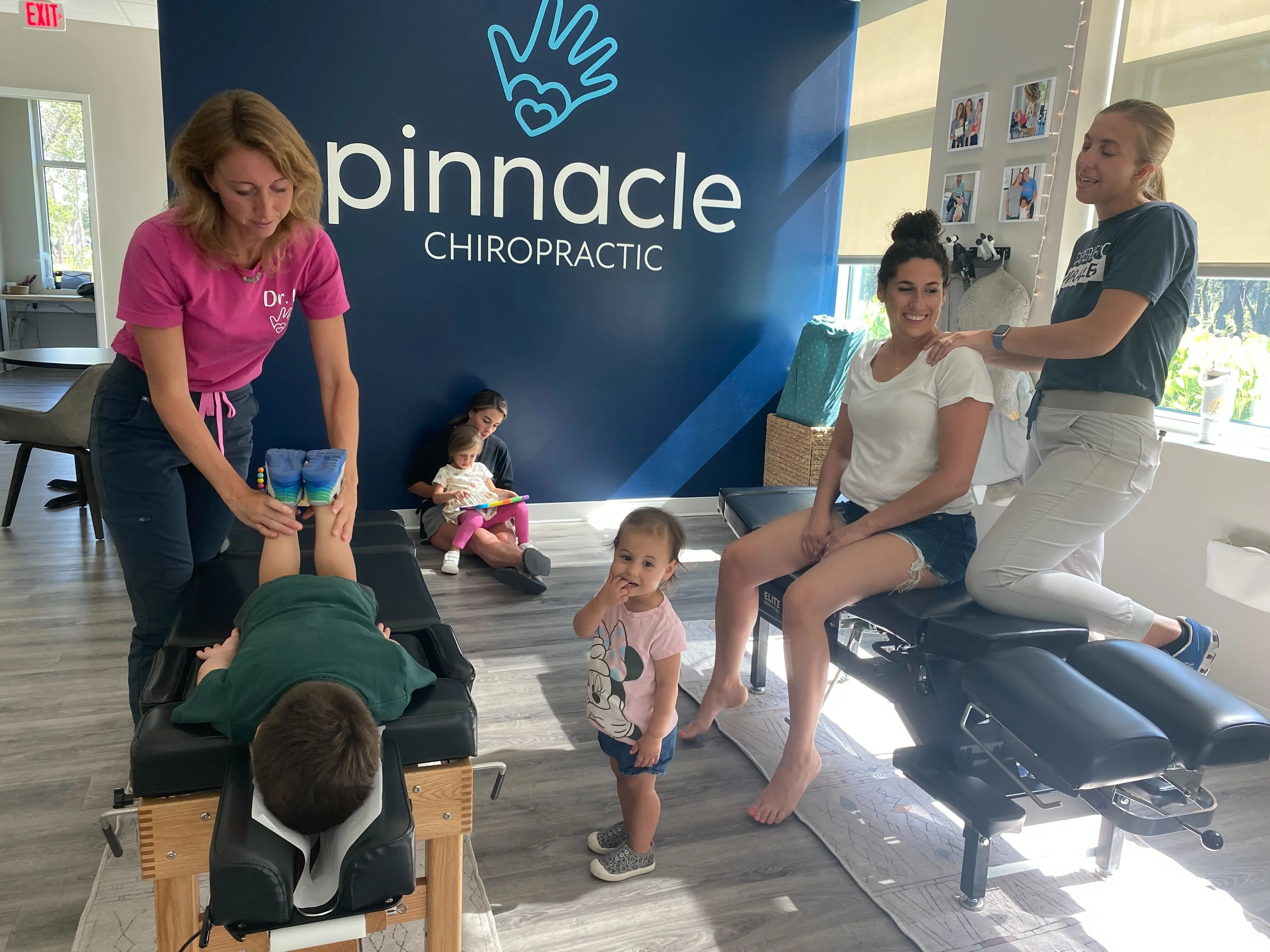
At Pinnacle Chiropractic, we take a whole-child, neurologically focused approach to pediatric chiropractic care. Using INSiGHT scans, we look directly at patterns of muscular tension and nervous system stress that may be contributing to how a child's body is handling the demands of an active day — we measure, we don't guess. Gentle chiropractic adjustments are designed to support healthy spinal and nervous system function, helping release built-up tension so your child's body can keep up more comfortably with everyday running, jumping, and playing.
Regular chiropractic care doesn't replace your pediatrician's evaluation, especially if any red-flag symptoms are present — but for the tension-related discomfort behind typical growing pains, it's often exactly the kind of support a growing body needs.
Frequently Asked Questions
What age do growing pains usually start and stop?
They're most common between ages 3 and 12, with two typical peaks — early childhood and the pre-teen years — though the exact timing varies from child to child.
Are growing pains actually caused by growing?
Not directly. Growing pains are more closely related to muscular tension from daily activity than to the physical process of bone growth — which is exactly why supporting your child's spine and nervous system can make such a difference.
Can chiropractic care help with growing pains?
Yes. Gentle pediatric chiropractic adjustments are designed to support healthy spinal and nervous system function, helping release the muscular tension that builds up during active days and often contributes to growing pains. It's not a substitute for your pediatrician's evaluation, especially if any red-flag symptoms are present.
Should I give my child pain medication for growing pains?
Talk with your pediatrician about what's appropriate for your child. Many families find that non-medication comfort measures like massage, stretching, warmth, and chiropractic care are enough for occasional discomfort.
When should I take my child to the doctor for leg pain?
Bring it up with your pediatrician if the pain is in one leg only, involves a joint, comes with swelling or fever, happens in the morning, causes limping, or is limiting your child's daily activities.
Can growing pains happen every night?
They can be frequent for some children and occasional for others, and the pattern can change over time. Very frequent, escalating, or increasingly severe pain is worth discussing with your pediatrician.
Is there a test to confirm growing pains?
Not a specific one. Pediatricians generally diagnose growing pains based on the classic pattern of symptoms and by ruling out other causes, sometimes using bloodwork or imaging if something doesn't fit the typical picture.
Final Thoughts
Growing pains are common, and while genuinely uncomfortable for your child in the moment, they're generally not a sign of anything serious. Knowing the typical pattern versus the red flags gives you a clear, practical way to decide when comfort measures and chiropractic support are enough, and when it's time for your pediatrician to take a closer look.
If your child deals with frequent leg discomfort, tension, or general nervous system stress, Pinnacle Chiropractic can help you better understand what may be contributing to it and support their comfort directly. Our neurologically focused approach uses objective INSiGHT scans and gentle chiropractic adjustments designed specifically for children. Pinnacle Chiropractic proudly serves families throughout Parrish, Lakewood Ranch, Sarasota, and Bradenton — contact us to schedule a consultation.



.webp)

.webp)