“I was told my baby is breech… now what?”
If you’ve heard this, your mind probably started racing.
You may have been told:
- “We’ll just wait and see.”
- “You might need a C-section.”
- “There are ways to try to turn the baby.”
And suddenly, pregnancy can feel a little less calm… and a lot more stressful.
Here’s what we want you to know:
Your body is not working against you.
And your baby is not “doing it wrong.”
Most of the time, it’s not about forcing baby to move—
it’s about creating an environment where they can.
Baby positioning isn’t just about the baby
This is one of the biggest mindset shifts for moms.
When a baby isn’t in the ideal position, the focus is usually:
“How do we turn the baby?”
But a better question is:
“Is there anything in mom’s body making it harder for baby to move freely?”
Because babies don’t just randomly get stuck.
They respond to the space they have.
The role of the pelvis, muscles, and nervous system
Your pelvis isn’t just a structure—it’s a dynamic, moving system.
It involves:
- The sacrum (tailbone)
- The pubic bone
- Ligaments supporting the uterus
- Muscles like the psoas and piriformis
All of these are influenced by your nervous system.
If there’s tension, imbalance, or restriction in any of these areas, it can:
- Reduce space in the uterus
- Create asymmetry
- Make it harder for baby to settle head-down
Again—not because your body is failing…
But because something is tight, stressed, or not moving well.
What the Webster Technique actually is (and isn’t)
Let’s clear this up, because there’s a lot of confusion.
The Webster Technique is not:
- Forcing a baby to turn
- Applying pressure to your belly
- Manually repositioning your baby
Instead, it’s a specific prenatal chiropractic technique designed to:
- Reduce tension in the pelvis
- Balance the surrounding muscles and ligaments
- Improve nervous system communication
So your body can create the best possible environment for baby.
What it looks like in practice
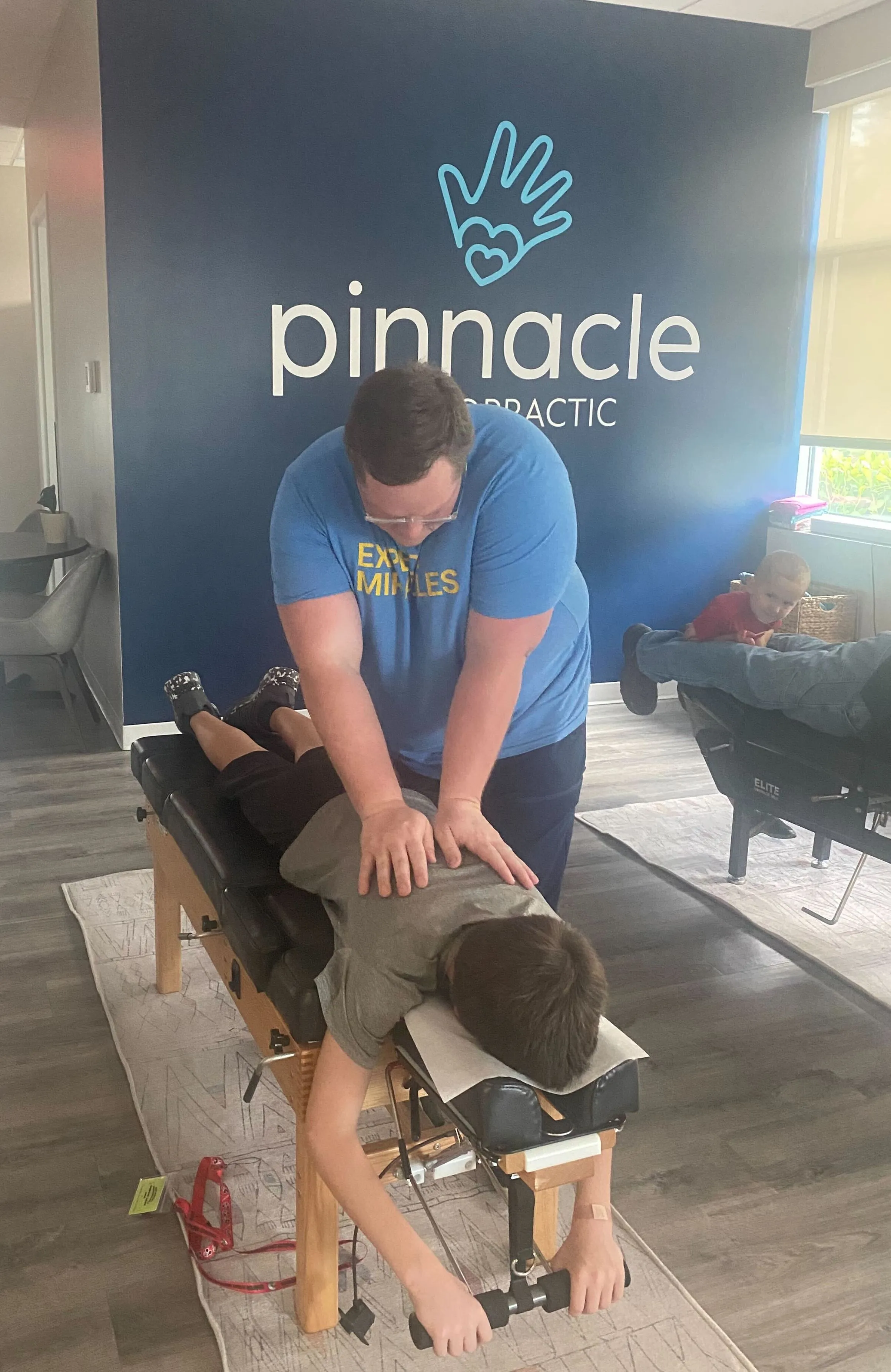
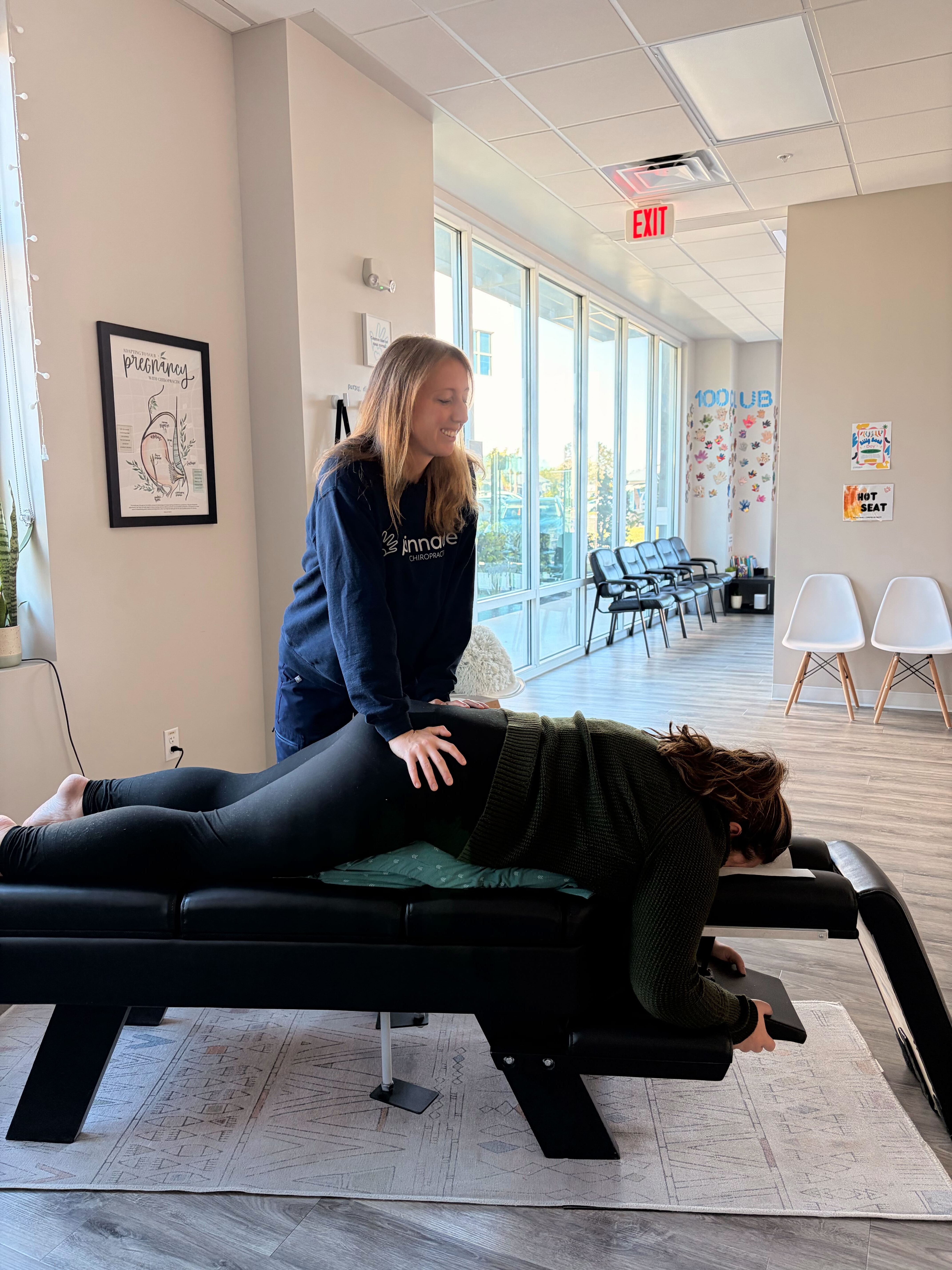
At Pinnacle Chiropractic, the Webster Technique is incredibly gentle and specific.
It typically includes:
- Gentle adjustments to the sacrum and pelvis (often using a drop table)
- Releasing tension in muscles like the psoas and piriformis
- Addressing ligaments that support the uterus, like the round ligament
You’re positioned comfortably on a specialized pregnancy table—
so you can safely lie face down without pressure on your belly.
There’s no force. No twisting. No aggressive movements.
Just precise, intentional work to help your body relax and balance.
Why this matters for baby positioning
When tension is reduced and the pelvis is more balanced:
- The uterus can function more symmetrically
- Baby has more space to move
- There’s less restriction influencing position
And often… babies move on their own.
Not because we “turned” them—
but because we removed what was getting in the way.
It’s about support, not control
This is the part that resonates most with moms.
The Webster Technique doesn’t try to control your body.
It supports it.
It respects that:
- Your body was designed for this
- Your baby is actively participating in the process
- The goal is cooperation—not force
When moms often seek out Webster care
We see moms come in for this for many reasons:
- Baby is breech or transverse
- They’re feeling pelvic tension or discomfort
- They want to prepare their body for labor
- They’re early in pregnancy and want to stay proactive
And honestly—Webster isn’t just for when something feels “wrong.”
It’s one of the best things you can do to support a smoother, more comfortable pregnancy from the beginning.
What moms often notice
As their body begins to relax and balance, many moms report:
- Less pelvic and hip discomfort
- Easier movement and walking
- Improved sleep
- A greater sense of connection to their body
- And sometimes… baby shifting into a more optimal position
Why this approach is different
Most conversations around baby positioning are focused on outcomes.
“Is the baby head down yet?”
But we focus on the process.
Because when the process is supported:
- The body works better
- Baby has more freedom
- And outcomes often take care of themselves
Final thoughts
If you’ve been told your baby isn’t in the “right” position, it’s easy to feel like something needs to be fixed.
But more often than not, your body doesn’t need to be forced—
It needs to be supported.
And that’s exactly what the Webster Technique is designed to do.
If you’re in the Bradenton, Sarasota, or Lakewood Ranch area and want to learn more about prenatal chiropractic care, our team would love to support you.
📍 7984 Cooper Creek Blvd., Suite #104, University Park, FL 34201
📞 (941) 822-8828
Visit our website at https://www.pinnaclebradenton.com



.webp)
.webp)