Is Your Child Sleeping with Their Mouth Open?
Maybe you’ve noticed:
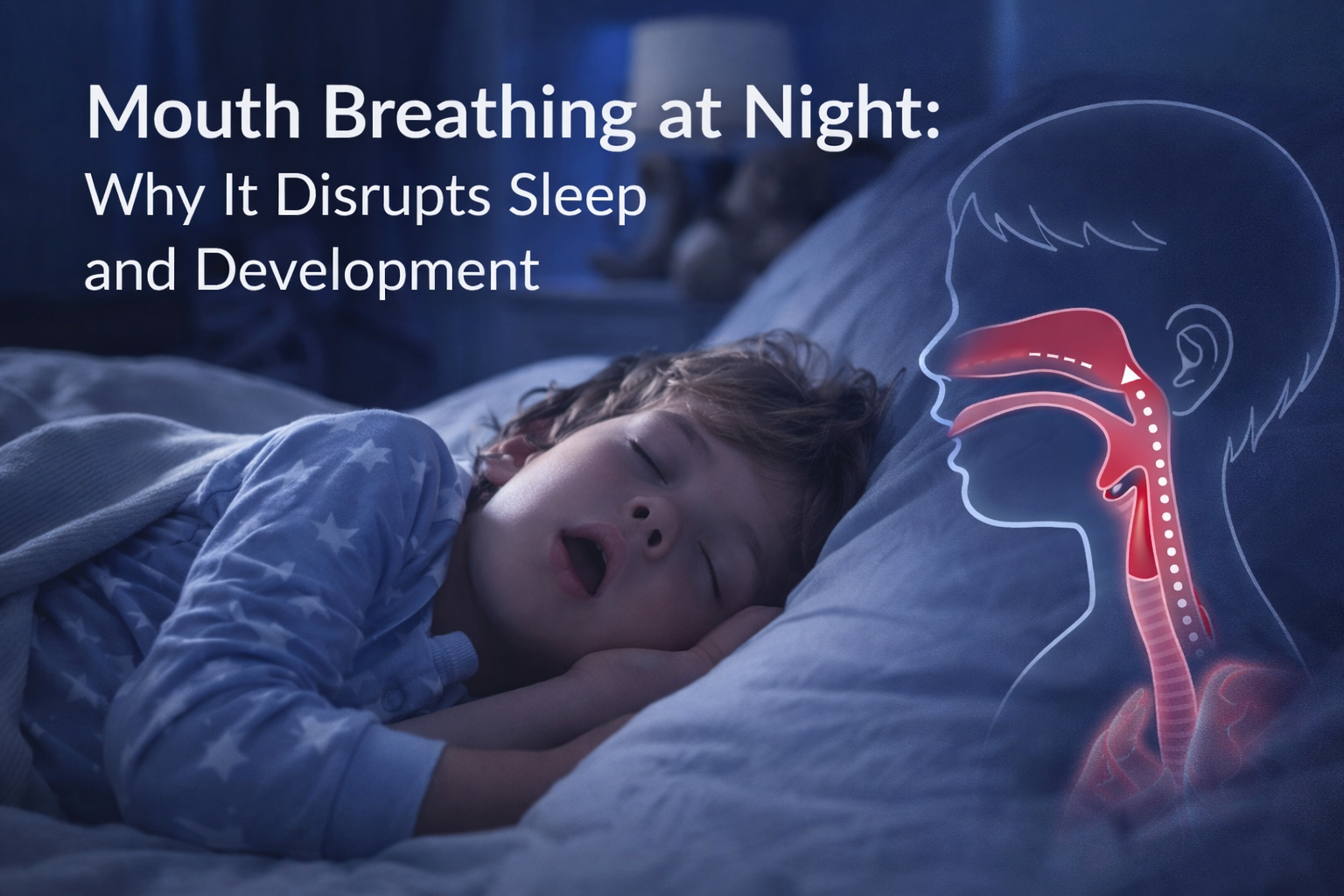
- Lips parted while sleeping
- Snoring or noisy breathing
- Drooling on the pillow
- Dark circles under the eyes
- Restless sleep
- Waking tired despite “sleeping all night”
Many parents are told mouth breathing is normal.
From a nervous system and developmental standpoint — it isn’t.
Mouth breathing at night can significantly impact:
- Oxygen delivery
- Brain development
- Facial growth
- Behavior
- Immune health
- Nervous system regulation
And it’s often overlooked.
Why Nasal Breathing Is So Important
The nose is designed for breathing.
When your child breathes through their nose:
- Air is filtered and humidified
- Nitric oxide is produced (supports oxygen delivery)
- Oxygen absorption improves
- The diaphragm functions properly
- Parasympathetic (calming) tone increases
Nasal breathing supports deep, restorative sleep.
Mouth breathing does the opposite.
What Happens When a Child Mouth Breathes at Night?
When a child sleeps with their mouth open:
1. Oxygen Levels May Drop
Even small reductions in oxygen can impact:
- Brain development
- Memory consolidation
- Emotional regulation
- Growth hormone release
Sleep is when the brain wires and repairs. Poor oxygenation disrupts that process.
2. The Nervous System Stays in Fight-or-Flight
Mouth breathing activates accessory muscles of respiration (neck and upper chest), which signals stress to the body.
Instead of deep diaphragmatic breathing (rest-and-repair), the body stays slightly activated.
This can lead to:
- Restless sleep
- Night waking
- Teeth grinding
- Bedwetting
- Morning irritability
The child may appear to sleep — but the nervous system isn’t fully resting.
3. Facial & Airway Development Can Change
Chronic mouth breathing can influence:
- Narrow palate
- Crowded teeth
- Long face syndrome
- Poor jaw development
- Increased risk of sleep-disordered breathing
Proper nasal breathing helps guide healthy airway growth.
This is why early detection matters.
Signs Your Child May Be Mouth Breathing at Night
Look for:
- Snoring
- Grinding teeth
- Open-mouth sleeping
- Chronic congestion
- Frequent ear infections
- Dark under-eye circles (“allergic shiners”)
- ADHD-like behaviors
- Difficulty focusing
- Sensory sensitivities
These signs are often labeled behavioral — but they can be sleep-related.
The Sleep–Behavior Connection
When sleep is disrupted:
- Cortisol rises
- Emotional regulation decreases
- Focus declines
- Hyperactivity increases
- Meltdowns become more frequent
We often see children diagnosed with ADHD who are actually sleep deprived due to airway or breathing issues.
The nervous system can’t regulate properly without deep sleep.
What Causes Mouth Breathing?
Common contributors include:
- Enlarged tonsils or adenoids
- Chronic allergies
- Narrow palate
- Tongue tie
- Birth tension
- Upper cervical restriction
- Nervous system dysregulation
At Pinnacle Chiropractic, we don’t just ask “Is your child snoring?”
We ask:
What is their nervous system doing underneath it?
The Nervous System & Airway Connection
The upper cervical spine (neck) plays a role in:
- Vagus nerve function
- Airway tone
- Muscle tension
- Parasympathetic regulation
If there is tension or miscommunication at this level, breathing patterns can shift.
Our INSiGHT scans (thermal, EMG, HRV) allow us to assess:
- Stress levels
- Muscle tension
- Inflammatory patterns
- Autonomic balance
When regulation improves, breathing patterns often improve as well.
How Nervous System–Based Chiropractic Care Helps
At Pinnacle Chiropractic, we focus on restoring communication between the brain and body.
For mouth breathing children, care may support:
- Reduced upper cervical tension
- Improved vagal tone
- Better diaphragmatic breathing
- Calmer sleep cycles
- Improved sleep quality
We often collaborate with:
- Myofunctional therapists
- Airway dentists
- ENTs
- Lactation consultants
Because airway health is a team effort.
Why Early Intervention Matters
Mouth breathing isn’t just about sleep tonight.
It can influence:
- Brain wiring
- Emotional resilience
- Immune health
- Facial growth
- Academic performance
The earlier the nervous system is supported, the easier it is to guide healthy development.
When Should You Be Concerned?
If your child:
- Snores regularly
- Sleeps with their mouth open
- Wakes tired
- Has frequent behavioral struggles
- Grinds their teeth
- Has chronic congestion
It’s worth evaluating.
You don’t need to wait for it to become severe.
Why Families Choose Pinnacle Chiropractic
For nearly a decade, Pinnacle Chiropractic has served Bradenton, Sarasota, and Lakewood Ranch families with neurologically focused pediatric and prenatal chiropractic care.
Our mission:
Help every child reach their Pinnacle Potential.
📍 7984 Cooper Creek Blvd., Suite #104, University Park, FL 34201
📞 (941) 822-8828
Visit our website at https://www.pinnaclebradenton.com
Final Thoughts
Mouth breathing at night is not just a habit.
It’s often a signal.
When sleep improves, development improves.
When breathing improves, regulation improves.
And when the nervous system feels safe — everything functions better.



.webp)

.webp)