“Are These Just Phases… or Is Something Else Going On?”
Parents often notice one of these first:
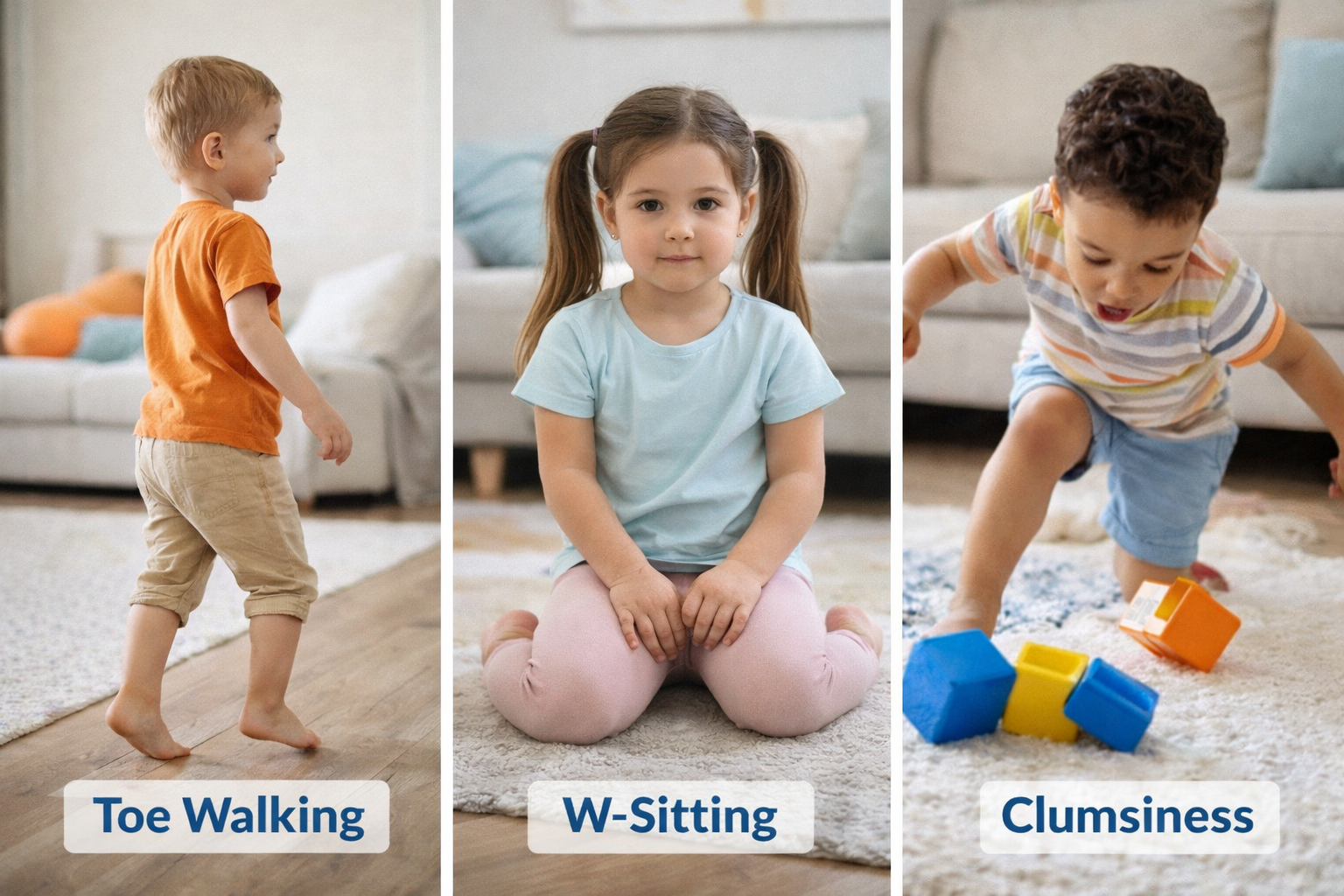
- Their child prefers to sit in a W-position
- They walk or run on their toes
- They seem unusually clumsy or uncoordinated
Individually, each of these behaviors is often brushed off as “just a phase.”
But when we look at the nervous system, these patterns are frequently connected.
At Pinnacle Chiropractic, we don’t just look at posture or movement habits — we look at what the nervous system is doing underneath them.
What Is W-Sitting?
W-sitting is when a child sits on the floor with:
- Knees bent
- Feet positioned out to the sides
- Legs forming a “W” shape
Many toddlers naturally experiment with this position. However, when W-sitting becomes a preferred or dominant position, it can signal:
- Core weakness
- Poor trunk stability
- Limited hip mobility
- Challenges with balance and coordination
But even more importantly, it often signals a nervous system that is seeking extra stability.
What Does Toe Walking Mean?
Toe walking occurs when a child consistently walks or runs on the balls of their feet rather than using a normal heel-to-toe gait.
While occasional toe walking can be normal in toddlers, persistent toe walking may indicate:
- Increased muscle tone
- Sensory processing challenges
- Retained primitive reflexes
- Nervous system tension
Toe walking is often the body’s way of creating more sensory input and stability when regulation feels off.
Why Clumsiness Isn’t Just “Being Careless”
Children who:
- Trip frequently
- Bump into furniture
- Struggle with balance
- Have difficulty with sports or coordination
are often labeled as clumsy.
But clumsiness is frequently a motor planning or proprioceptive issue, meaning the brain and body aren’t communicating as efficiently as they could.
This is not laziness.
It’s a regulation and integration issue.
The Common Thread: Nervous System Regulation
So how are W-sitting, toe walking, and clumsiness connected?
They often share underlying challenges with:
- Core stability
- Balance and coordination
- Reflex integration
- Proprioception (body awareness)
- Brain-body communication
When the nervous system is under stress, the body compensates.
W-sitting creates more stability.
Toe walking increases sensory input.
Clumsiness reflects immature motor integration.
They’re not random behaviors — they’re adaptations.
The Primitive Reflex Connection
Primitive reflexes are automatic movement patterns babies are born with. These reflexes should gradually integrate as the brain matures.
If reflexes like the STNR (Symmetrical Tonic Neck Reflex) or ATNR (Asymmetrical Tonic Neck Reflex) remain active, we may see:
- W-sitting as a stabilizing strategy
- Toe walking due to retained tension patterns
- Poor coordination and balance
- Difficulty sitting upright for long periods
Reflex retention is often tied to early nervous system stress, including birth tension or limited crawling.
Why Crawling History Matters
Crawling plays a huge role in:
- Cross-pattern brain communication
- Core strength development
- Reflex integration
- Vestibular (balance) system maturation
Children who skipped crawling or crawled briefly may be more likely to develop these compensatory patterns later.
This doesn’t mean something is “wrong.” It means the nervous system may need support completing foundational wiring.
Sensory Processing & Muscle Tone
Children with sensory processing differences often:
- Seek pressure or stability
- Avoid certain textures or movements
- Display increased muscle tension
Toe walking and W-sitting can both be strategies to manage sensory input and feel more grounded.
Clumsiness can occur when the vestibular and proprioceptive systems aren’t fully integrated.
When Should Parents Pay Closer Attention?
Occasional W-sitting or brief toe walking isn’t necessarily concerning.
It may warrant further evaluation when:
- W-sitting is the only preferred sitting position
- Toe walking persists beyond age 2–3
- Your child struggles with coordination compared to peers
- There are sensory sensitivities or behavioral challenges
- Your child tires easily or avoids physical activity
These patterns are signals, not labels.
How Nervous System–Based Chiropractic Care Can Help
At Pinnacle Chiropractic, we evaluate how well your child’s nervous system is adapting and communicating.
Our approach focuses on:
- Reducing neurological tension
- Supporting reflex integration
- Improving brain-body communication
- Enhancing balance and coordination
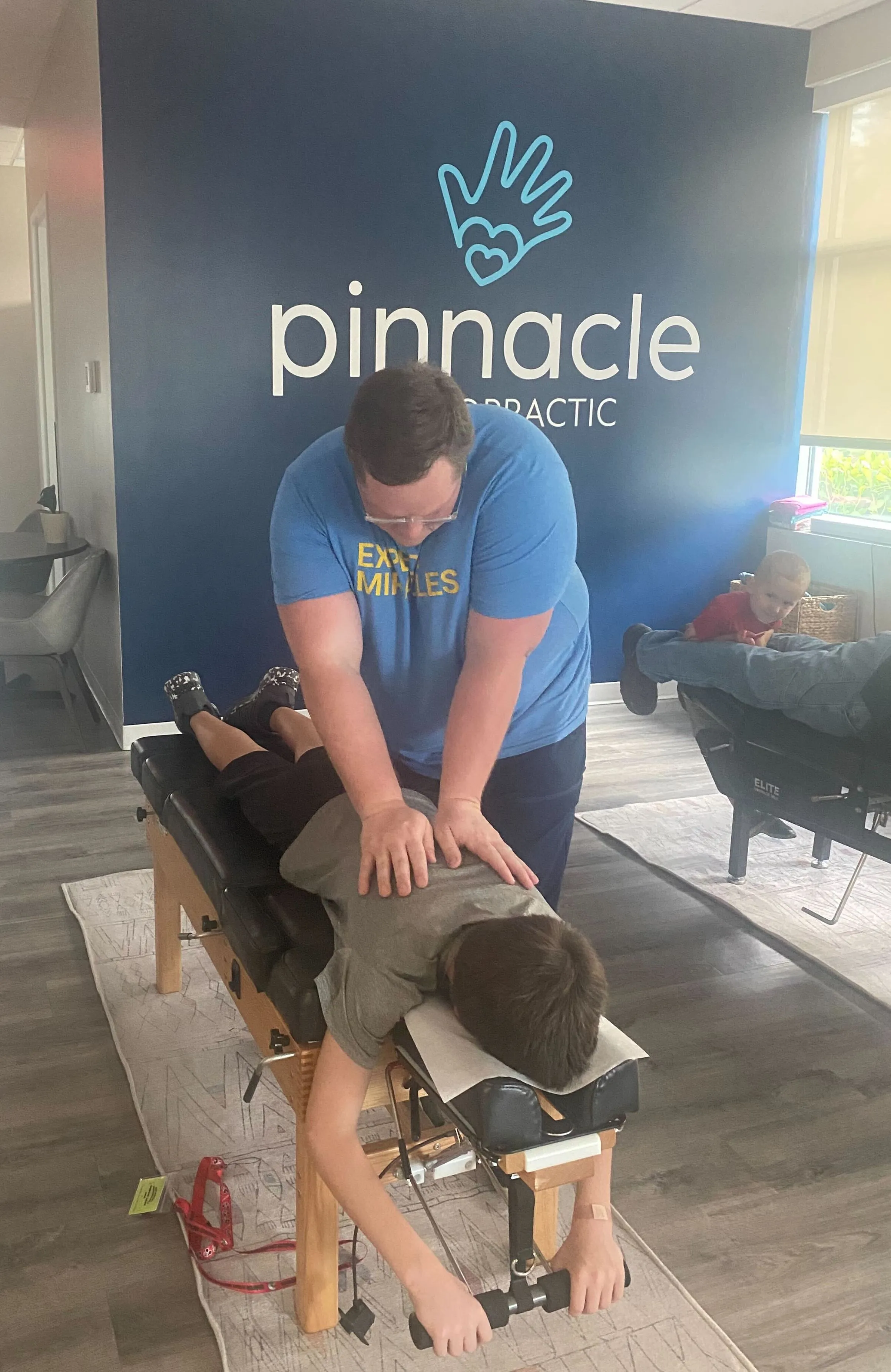
Adjustments are gentle, specific, and tailored to your child’s development.
We often collaborate with:
- Pediatric occupational therapists
- Physical therapists
- Speech therapists
Because supporting the nervous system enhances every other intervention.
What Parents Often Notice
When the nervous system becomes more regulated, families frequently report:
- Improved posture and sitting patterns
- Reduced toe walking
- Better balance and coordination
- Increased confidence in movement
- Fewer falls and bumps
The body doesn’t need to compensate when it feels stable and supported.
These Signs Are Information — Not Diagnoses
W-sitting.
Toe walking.
Clumsiness.
These are not labels. They are communication.
When we understand what the nervous system is saying, we move from correction to connection — and from frustration to clarity.
Why Families Choose Pinnacle Chiropractic
Pinnacle Chiropractic specializes in nervous system–based pediatric, prenatal, and family chiropractic care. Our doctors are trained through the ICPA and focus on helping children reach their Pinnacle Potential through neurologically focused care.
📍 7984 Cooper Creek Blvd., Suite #104, University Park, FL 34201
📞 (941) 822-8828
Visit our website at https://www.pinnaclebradenton.com
Final Thoughts
Movement patterns tell a story.
When W-sitting, toe walking, and clumsiness show up together, it’s often the nervous system asking for support.
The earlier we listen, the easier it is to build strong foundations for balance, coordination, learning, and regulation.
Looking for a Pediatric or Prenatal Chiropractor near you?
Please visit www.ivtnearme.com to find someone in your area.



.webp)
.webp)