Your child's teacher mentions it at conferences: "He just can't sit still." At home you see the same thing — swinging legs, tapping pencils, tipping chairs, and a body that always seems to be in motion. Before assuming something is wrong, it helps to understand what fidgeting actually is.
Why Kids Fidget
Children's bodies are built to move. The brain and body learn through movement, and the nervous system uses it to stay alert and organized. For many kids, fidgeting is a way of self-regulating — adding a little input so the brain can keep paying attention.
Common reasons children wiggle include:
• Too much sitting. Many school days ask kids to sit for long stretches with few movement breaks.
• Seeking sensory input. Some children need more movement or pressure to feel settled in their bodies.
• Posture fatigue. A child with weaker core or postural control may shift constantly because holding a position is tiring.
• Overwhelm. Noise, bright lights and a busy classroom can push a sensitive nervous system to wiggle or fidget as a coping response.
• Lack of rest or nutrition. Poor sleep and blood-sugar swings can make focus harder.
The Nervous System Connection
The nervous system helps coordinate posture, movement, attention and emotional regulation. When a child's system has trouble organizing sensory information, sitting still can feel genuinely uncomfortable — not a choice. This is the same lens we use when looking at sensory sensitivities and meltdowns.
Fidgeting alone is not a diagnosis. But if it comes with other patterns — trouble with coordination, poor posture, difficulty transitioning, or big emotions — a closer look at how your child's nervous system is functioning may be worthwhile.
How Pediatric Chiropractic Care Fits In
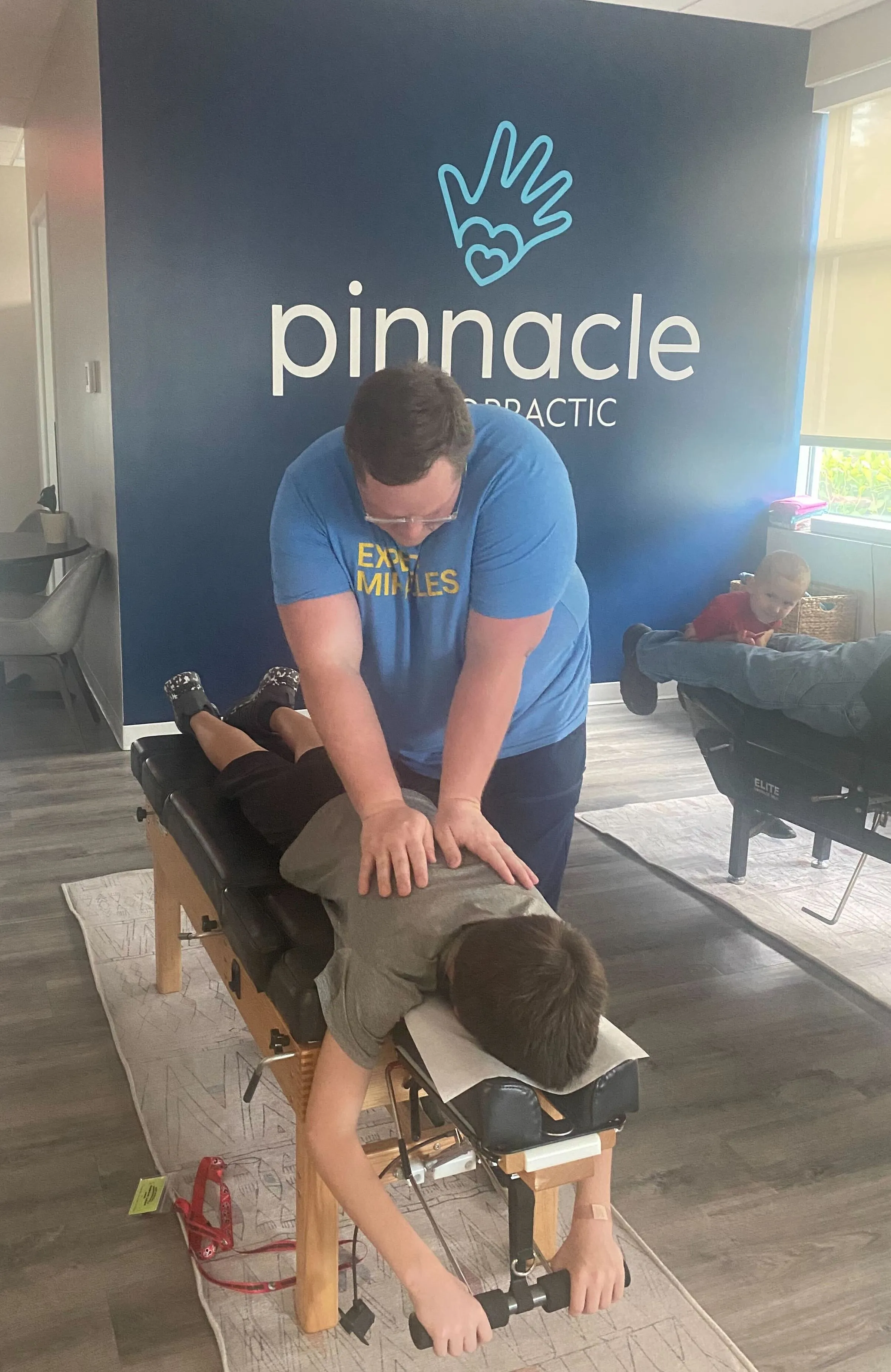
Chiropractic care doesn't cure or treat attention or behavior concerns. What it can do is support the way a child's spine and nervous system are functioning. At Pinnacle Chiropractic, Dr. Matt Morris begins with a thorough nervous system evaluation, looking at posture, movement patterns, reflexes and tension. Gentle, age-appropriate pediatric chiropractic care may then be used to support your child's body as part of a bigger picture that includes movement, sleep and nutrition.
Tips for Wiggly Kids
• Schedule movement before sitting. Even 10 minutes of running, jumping or climbing before homework can help.
• Offer heavy-work activities. Carrying groceries, pushing a laundry basket, wall push-ups and animal walks give strong body feedback.
• Try a wobble cushion or standing option. Ask the teacher about flexible seating or short movement breaks.
• Protect sleep. Consistent bedtimes and limited evening screens make a big difference in daytime focus. See our guide on balanced screen time.
• Check the basics. Protein-rich breakfasts and steady snacks help many kids stay even through the day.
Frequently Asked Questions
Is fidgeting a sign of ADHD?
Not necessarily. Many typical, healthy children fidget. If inattention or impulsivity is significantly affecting school, friendships or home life, talk with your child's healthcare provider about a full evaluation.
Should I stop my child from fidgeting?
Usually not. Quiet, non-distracting movement can actually help some children concentrate. Work with the teacher on movement options that fit the classroom.
Can chiropractic care help my child focus?
Chiropractic care supports spinal and nervous system function, and many parents tell us they notice their child feels more settled. It is not a treatment for attention disorders, and results vary from child to child.
Final Thoughts
A wiggly child is often a child whose body is asking for something. By offering movement, rest and supportive care, you can help them feel more comfortable and confident in the classroom. If you'd like a closer look at how your child's nervous system is doing, contact Pinnacle Chiropractic to schedule an evaluation.