.webp)
Sensory Sensitivities in Kids: Clothing Tags, Loud Noises, and a Nervous System Perspective
Some children can't stand scratchy tags, seams in their socks, the hum of a hand dryer, or the feeling of a messy hand. To a parent, it can look like pickiness or overreaction. To the child, those sensations can feel genuinely uncomfortable or even overwhelming. At Pinnacle Chiropractic, many families in Lakewood Ranch, Sarasota, and Bradenton ask us why their child seems so sensitive, and what can help.
This article explains what sensory sensitivities are, why they happen, what is common, and how a nervous system perspective can help families respond with understanding and support.
Key Summary
• Sensory sensitivity means a child's nervous system reacts more strongly than expected to everyday sounds, textures, lights, tastes, or movement.
• Many young children go through phases of sensitivity, and some stay sensitive as they grow.
• Sensory sensitivities are not misbehavior or a parenting failure. They reflect how a child's nervous system processes information.
• They can show up alongside many other experiences, including autism, ADHD, anxiety, or no diagnosis at all, but they do not mean any one thing on their own.
• Predictable routines, calm environments, and nervous system regulation can support comfort, and an evaluation by your pediatrician or an occupational therapist can provide more answers.
What Are Sensory Sensitivities?
Our senses constantly send information to the brain, which sorts out what to notice and what to ignore. In some children, that sorting works differently. A sound that most people filter out may feel loud and distracting. A tag against the skin may feel impossible to ignore. Some kids are over-responsive to sensations, some are under-responsive and seek more input, and some are a mix of both.
Common Signs Parents Notice
• Clothing — refusing tags, seams, certain fabrics, or shoes and socks.
• Sound — covering ears at vacuums, hand dryers, fireworks, or crowded places.
• Touch — avoiding messy play, sticky hands, hugs, or haircuts and face washing.
• Food — strong reactions to textures, smells, or mixed foods. Our post on nutrition tips for picky eaters may help here.
• Movement — fear of swings, heights, or being tipped backward, or the opposite, constantly seeking spinning and crashing.
• Big reactions — meltdowns after a busy day or an overstimulating place.
Why This Matters
When a child's nervous system is on high alert, everyday life can feel like too much, and the result is often big emotions at the end of the day. Understanding that behavior is communication, rather than defiance, helps families respond with patience. If meltdowns are a daily theme in your home, our article on meltdowns and tantrums from a nervous system perspective offers practical ideas.
The Nervous System Connection
The nervous system has two main modes. Fight-or-flight helps us respond to stress, and rest-and-digest helps us calm down, recover, and feel safe. When a child spends a lot of time in fight-or-flight, sensations that are ordinarily tolerable can feel more threatening. Supporting regulation, meaning the nervous system's ability to shift between these modes, can help a child feel more comfortable in their environment. Related patterns can also show up as habits; see our post on nail-biting, thumb-sucking, and anxious habits.
What Parents Can Do
• Believe your child. If a tag hurts, remove the tag.
• Choose tagless, seamless clothing and soft fabrics when you can.
• Give warnings before loud or busy events, and bring headphones or ear protection.
• Build predictable routines with advance notice of transitions.
• Offer calming input like deep pressure, heavy work such as carrying groceries, or a quiet corner.
• Introduce new textures gradually and without pressure, through play.
• Talk with your pediatrician or an occupational therapist if sensitivities are interfering with daily life.
How Pinnacle Chiropractic Approaches Sensory Challenges
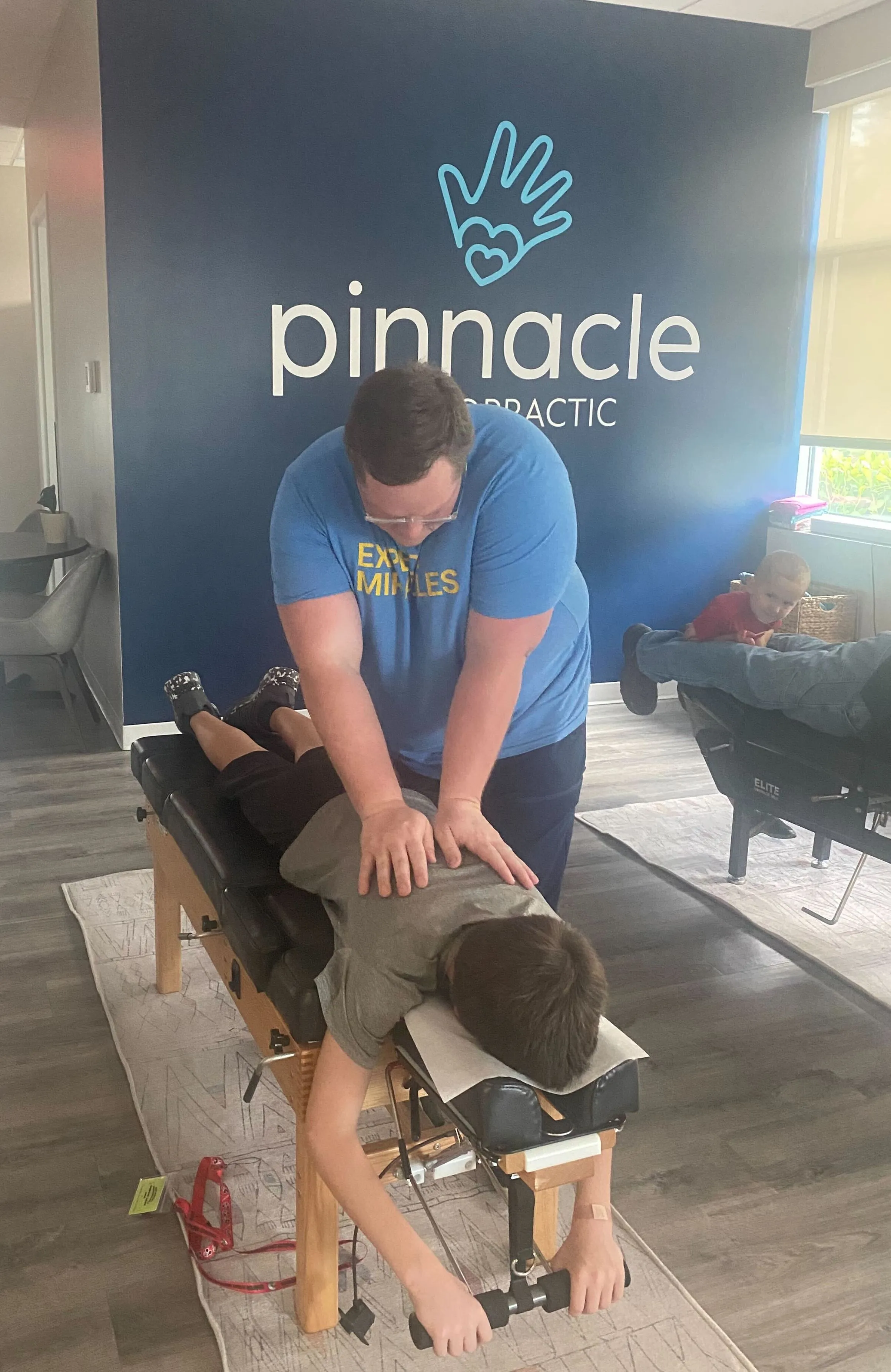
At Pinnacle Chiropractic, we never view a sensitive child as broken. We begin with a nervous system evaluation using objective INSiGHT scans, including thermography, surface EMG, and heart rate variability, because we measure, we don't guess. These scans are not diagnostic tests for sensory processing, but they offer a window into how a child's nervous system is adapting to stress. From there, we create a personalized plan of gentle pediatric chiropractic adjustments designed to support nervous system regulation, and we work alongside your pediatrician and any therapists your child sees. Fine motor and coordination challenges often travel with sensory differences, so you may also find our post on messy handwriting and fine motor struggles helpful.
FAQs
Is my child just picky or truly sensitive?
Both are possible. If reactions are strong, consistent, and interfere with daily life, it may reflect real sensory discomfort, which is worth discussing with your pediatrician.
Do sensory sensitivities mean my child has autism or ADHD?
Not necessarily. Sensory sensitivities can appear in many children, with or without a diagnosis. Only a qualified provider can evaluate whether another condition is present.
Will my child outgrow sensory sensitivities?
Some children become more comfortable as they grow and develop coping skills, while others remain sensitive. Support and understanding help either way.
What kind of specialist can help?
Occupational therapists with sensory training are often the first stop. Your pediatrician can also guide referrals.
Can chiropractic care help sensory sensitivities?
Gentle pediatric chiropractic adjustments are designed to support nervous system regulation and overall function. We do not claim to treat or cure sensory processing differences, and we work alongside your child's other providers.
How can I help my child during a sensory meltdown?
Stay calm, lower the input by moving to a quiet space, offer comfort like deep pressure if your child welcomes it, and save conversations about the event for later.
Final Thoughts
A child who is sensitive to the world is not being difficult. They are experiencing it intensely. With understanding, small environmental changes, and support for nervous system regulation, many families find daily life gets calmer.
If your child struggles with sensory challenges, emotional regulation, sleep, or other signs of nervous system stress, Pinnacle Chiropractic can help you better understand what may be going on. Our neurologically focused approach uses objective INSiGHT scans and gentle chiropractic adjustments designed specifically for children. Contact Pinnacle Chiropractic to schedule a consultation.



.webp)