.webp)
Night Terrors vs. Nightmares: What Bradenton Parents Should Know
Few things shake a parent up like hearing your child scream in the middle of the night — sitting up, eyes open, thrashing, and seemingly wide awake, but not actually responding to you at all. If this has happened in your house, you've likely already discovered that a night terror is a completely different animal from a bad dream, and that comforting your child the way you would after a nightmare often doesn't work the way you'd expect. It's a question we hear regularly from families in Bradenton, Lakewood Ranch, Sarasota, and Parrish, and understanding what's actually happening in your child's nervous system during a night terror can make these episodes far less frightening for everyone involved.
This guide breaks down what night terrors actually are, how they differ from nightmares, the nervous system patterns we see behind them, and what parents in Bradenton, Lakewood Ranch, Sarasota, and Parrish can do to help their child sleep more soundly.
Key Summary
• Night terrors typically occur in children between ages 3 and 10, most commonly around ages 3 to 7, and happen during deep non-REM sleep in the first third of the night — not during dreaming sleep.
• Unlike nightmares, a child having a night terror won't wake up fully, won't respond normally to comfort, and won't remember the episode the next morning.
• At Pinnacle Chiropractic, we see night terrors as closely connected to how well a child's nervous system is able to transition smoothly between sleep stages — especially when the nervous system is already carrying tension or stress from the day.
• Common triggers include overtiredness, an irregular sleep schedule, fever, stress, changes in routine, and sleeping somewhere unfamiliar.
• Contact your pediatrician if episodes are frequent, last longer than 30 minutes, involve unusual movements, or if you notice signs of a sleep-related breathing problem like snoring or gasping.
• Gentle pediatric chiropractic adjustments are designed to support healthy nervous system regulation, helping a child's body move through sleep cycles with less disruption.
What Are Night Terrors?
A night terror is a partial arousal from deep, non-REM sleep that usually happens in the first third of the night, often one to a few hours after falling asleep. During an episode, a child may sit up, scream, cry, thrash, or even get out of bed, with eyes open and a look of pure fear on their face — but they're not actually awake in the way we think of being awake, and they're not having a bad dream. They're caught partway between deep sleep and waking, and their body is reacting to that in-between state as if something is wrong.
Night terrors are most common between ages 3 and 10, with new cases most often starting around age 3 to 4, and many children outgrow them by the early school years. Somewhere between 1 and 6 out of every 100 children experience them.
Night Terrors vs. Nightmares
Because both can involve a child crying out at night, it's easy to lump night terrors and nightmares together — but they're genuinely different experiences.
• Timing: Night terrors happen during deep non-REM sleep, usually in the first third of the night. Nightmares happen during REM (dreaming) sleep, usually later in the night, closer to morning.
• Responsiveness: A child in a night terror looks awake but is genuinely difficult to wake or comfort, and may not recognize you or respond to your voice. A child who's had a nightmare wakes up, recognizes you, and can usually be soothed.
• Memory: Children almost never remember a night terror the next day. Nightmares are often remembered clearly, sometimes in detail.
• What it looks like for parents: Night terrors can look more intense in the moment — screaming, a racing heart, sweating, thrashing — even though the child isn't actually distressed by a dream the way they are during a nightmare.
Understanding this difference matters because the instinct to fully wake and comfort a child mid-night-terror often doesn't help, and can sometimes prolong the episode. The most effective response is usually to stay close, keep your child safe, and wait for it to pass on its own.
What Contributes to Night Terrors
Night terrors happen when a child's nervous system has a harder time making a clean transition between deep sleep and lighter sleep stages. Several factors make that transition more difficult:
• Overtiredness or an irregular sleep schedule — one of the most common triggers we see
• Fever or illness, which can disrupt normal sleep architecture
• Stress or big changes — a new sibling, starting school, a move, or other shifts in routine
• Sleeping in an unfamiliar place, like during travel or a sleepover
• A full bladder or other physical discomfort during sleep
• Underlying sleep-disrupting conditions, such as sleep apnea or restless legs syndrome, which are worth ruling out with your pediatrician if episodes are frequent
• A family history of night terrors or sleepwalking, which often runs in families
When to Contact Your Pediatrician
Most night terrors are not dangerous on their own, even though they're distressing to witness. That said, certain patterns are worth bringing to your pediatrician:
• Episodes that happen frequently, several times a week or more
• An episode lasting longer than 30 minutes
• Loud snoring, gasping, or pauses in breathing during sleep, which can point to sleep apnea
• Jerking or twitching movements that seem different from a typical night terror, which your pediatrician may want to evaluate for other causes
• New night terrors starting in a teenager or adult, since this pattern is far less typical outside early-to-mid childhood
• Any injury during an episode, or safety concerns about where your child sleeps
These signs call for your pediatrician's evaluation to rule out an underlying sleep or medical condition — they're not something chiropractic care is meant to diagnose.
What Parents Can Do
• Have your child evaluated by a pediatric chiropractor, especially if night terrors are frequent — supporting healthy nervous system regulation is often exactly what helps a child move through sleep cycles more smoothly.
• Protect a consistent, age-appropriate bedtime and keep naps and wake times steady — overtiredness is one of the biggest triggers.
• Stay calm and stay close during an episode rather than trying to fully wake your child, which can sometimes make things worse.
• Keep your child's sleep space safe — a bed away from stairs or hard furniture edges — in case of movement during an episode.
• Build in wind-down time before bed, limiting screens and stimulating activity in the hour before sleep.
• Track when episodes happen — time of night, how long they last, what the day looked like beforehand — so you have useful information to share with your pediatrician or chiropractor.
• Talk to your pediatrician if episodes are frequent, prolonged, or you notice signs of a breathing-related sleep issue.
The Nervous System Connection
Moving cleanly between sleep stages requires a nervous system that can shift smoothly between different levels of arousal — something that's harder to do when a child's nervous system is already carrying tension or stress from the day. At Pinnacle Chiropractic, we look closely at how well a child's nervous system is regulating that shift between rest states, since we frequently see night terrors ease up as overall nervous system regulation improves. This is part of why we don't view night terrors as something to simply wait out without understanding what's contributing to them.
How Pinnacle Chiropractic Approaches This
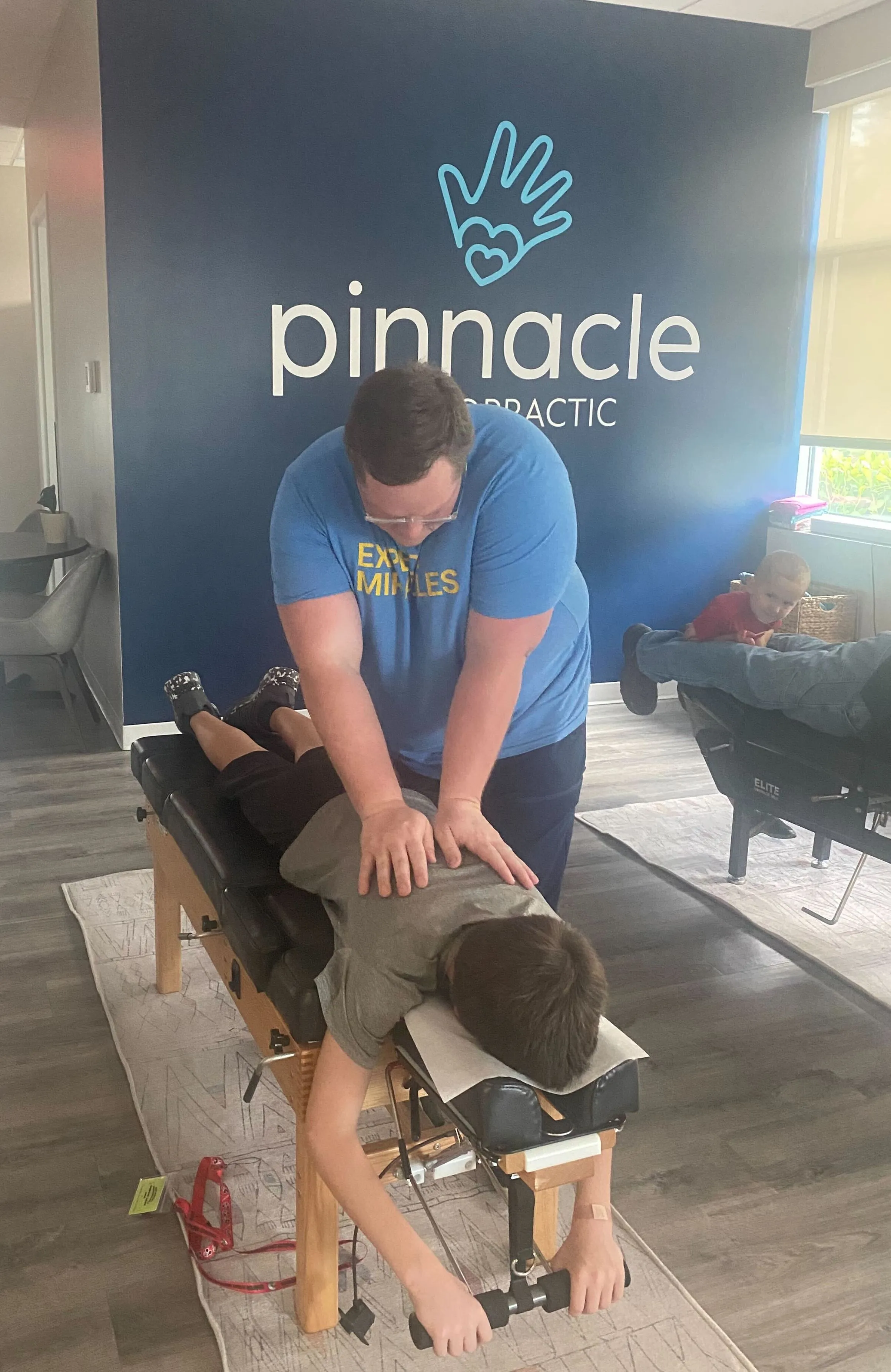
At Pinnacle Chiropractic, we take a neurologically focused approach to pediatric chiropractic care. Using INSiGHT scans, we look directly at patterns of nervous system stress and autonomic regulation that may be contributing to how well your child's body settles into and moves through sleep — we measure, we don't guess. Gentle chiropractic adjustments are designed to support healthy nervous system function, helping release built-up tension so your child's body can shift between sleep stages with less disruption.
Chiropractic care isn't a substitute for your pediatrician's evaluation, especially if you notice any of the red flags above — but for the nervous system tension that often sits behind frequent night terrors, it's often exactly the kind of support a developing nervous system needs.
Frequently Asked Questions
At what age do night terrors usually start?
They most often begin between ages 3 and 4, though they can occur anywhere from about age 3 to 10. Most children outgrow them by the early school years.
Should I wake my child up during a night terror?
Generally, no. Trying to fully wake a child mid-episode is often difficult and can sometimes prolong it. It's usually more effective to stay close, keep them safe, and let the episode pass on its own.
Will my child remember the night terror in the morning?
Almost never. This is one of the clearest ways to tell a night terror apart from a nightmare, which children often remember clearly.
Can chiropractic care help with night terrors?
Gentle pediatric chiropractic adjustments are designed to support healthy nervous system regulation, which plays a role in how smoothly a child moves through sleep stages. It's not a substitute for your pediatrician's evaluation, especially if episodes are frequent, prolonged, or paired with signs of a breathing-related sleep issue.
Are night terrors a sign of a psychological problem?
Not typically. Night terrors are a sleep phenomenon related to the transition between sleep stages, not a sign of emotional or psychological trouble, though stress and big changes can make them more frequent for some children.
Do night terrors mean my child isn't sleeping well?
They can disrupt sleep for the household, but the child themselves is usually still getting deep, restorative sleep — they just aren't aware of the episode. That said, frequent episodes are worth mentioning to your pediatrician.
Is there a test to diagnose night terrors?
Not usually. Pediatricians generally diagnose night terrors based on a description of the pattern. If frequent or unusual features are present, a sleep study may be recommended to rule out other sleep disorders.
Final Thoughts
Night terrors are unsettling to witness, but in most cases, they're a normal — if dramatic — part of how a young nervous system is still learning to move smoothly through sleep. Knowing the difference between a night terror and a nightmare, watching for the red flags that call for your pediatrician, and supporting your child's nervous system regulation can go a long way toward calmer nights for the whole family.
If your child deals with frequent night terrors, restless sleep, or other signs of nervous system stress, Pinnacle Chiropractic can help you better understand what may be contributing to it and support their comfort directly. Our neurologically focused approach uses objective INSiGHT scans and gentle chiropractic adjustments designed specifically for children. Pinnacle Chiropractic proudly serves families throughout Bradenton, Lakewood Ranch, Sarasota, and Parrish — contact us to schedule a consultation.



.webp)
.webp)