Tummy Time: Why It Matters and How to Make It Easier for Your Baby
Tummy time is supervised play while your awake baby lies on their stomach, and it is one of the simplest ways to support early strength and movement. It builds the neck, shoulder, and core muscles babies need to lift their heads, roll, sit, and eventually crawl. Yet many babies protest loudly, and many parents feel guilty or unsure how to keep going.
At Pinnacle Chiropractic, we support infants and their parents across Lakewood Ranch, Sarasota, and Bradenton, and tummy time is one of the most common questions we hear. This article explains why it matters, how much to aim for, what to try if your baby hates it, and how infant chiropractic care can fit alongside.
Key Summary
• Tummy time helps babies build neck, shoulder, back, and core strength needed for rolling, sitting, and crawling.
• Starting with a few minutes at a time from the early days, and building up as your baby tolerates it, is a common approach.
• Tummy time should always be supervised, and only while your baby is awake and alert.
• Fussing is common, and short, frequent, comfortable sessions usually work better than long ones.
• Strong dislike, a head that always turns one way, or a baby who seems stiff or very floppy are worth mentioning to your pediatrician and to us.
What Is Tummy Time, and Why Does It Matter?
Tummy time gives babies a chance to work against gravity. When a baby lies on their back for much of the day, in a car seat, bouncer, or swing, they have fewer chances to strengthen the muscles of the neck and upper body. Time on the tummy lets them lift their head, push up through their arms, and begin to explore movement on their own.
These skills build on each other. Head control leads to rolling, rolling leads to sitting, and sitting leads to crawling and beyond. Every baby develops at their own pace, so tummy time is about supporting that progress rather than racing toward milestones.
Why This Matters for the Nervous System
Movement and the nervous system develop together. When a baby lifts their head or shifts weight onto their arms, the brain and body are exchanging a constant stream of information about position, balance, and muscle effort. Variety of movement in the early months helps build that brain-body communication. Our related post on why W-sitting, toe-walking, and clumsiness are often connected shows how early movement patterns can echo later on.
How Much Tummy Time Does a Baby Need?
There is no single magic number, but guidance from pediatric groups generally encourages short sessions several times a day, building toward a total of about an hour daily by around three months, as your baby tolerates it. A newborn might begin with a minute or two on a parent's chest, building as strength and comfort grow. If your pediatrician has given different guidance for your baby, follow that.
What If My Baby Hates Tummy Time?
Lots of babies do, at least at first. Instead of pushing through tears, try changing the setup:
• Start on your chest — lie back and let your baby rest on your tummy, face to face. It counts, and it is easy to keep up.
• Keep sessions short — one to three minutes several times a day beats one long, tearful stretch.
• Get down on their level — lie on the floor face to face, sing, and make eye contact.
• Use a rolled towel — placing it under the chest and arms can make pushing up easier for a baby who is still building strength.
• Try different times of day — wait until your baby is rested and fed, but not right after a big feeding, which can lead to spit-up.
• Change the view — a mirror, a high-contrast toy, or a sibling playing nearby can give your baby something to look at.
Other Positions That Count
Tummy time does not have to be flat on the floor. Carrying your baby face-down along your forearm, lying them across your lap, or supporting them on your chest all offer similar benefits and may be easier when your baby is fussy. Mixing positions through the day also helps keep your baby from spending too long in any one position.
Signs to Mention to Your Pediatrician and Pinnacle Chiropractic
Many babies who dislike tummy time are simply working on new skills. A few patterns are worth raising with your baby's providers:
• Your baby's head seems to turn or tilt to one side much more than the other.
• One side of the head looks flatter, or your baby always favors one side.
• Your baby seems very stiff, or very floppy, during tummy time.
• Your baby cannot lift their head at all by a couple of months.
• Feeding seems difficult alongside these signs. Our post on difficulty latching and support for new mothers covers how feeding and body tension can connect.
How Infant Chiropractic Care Fits In
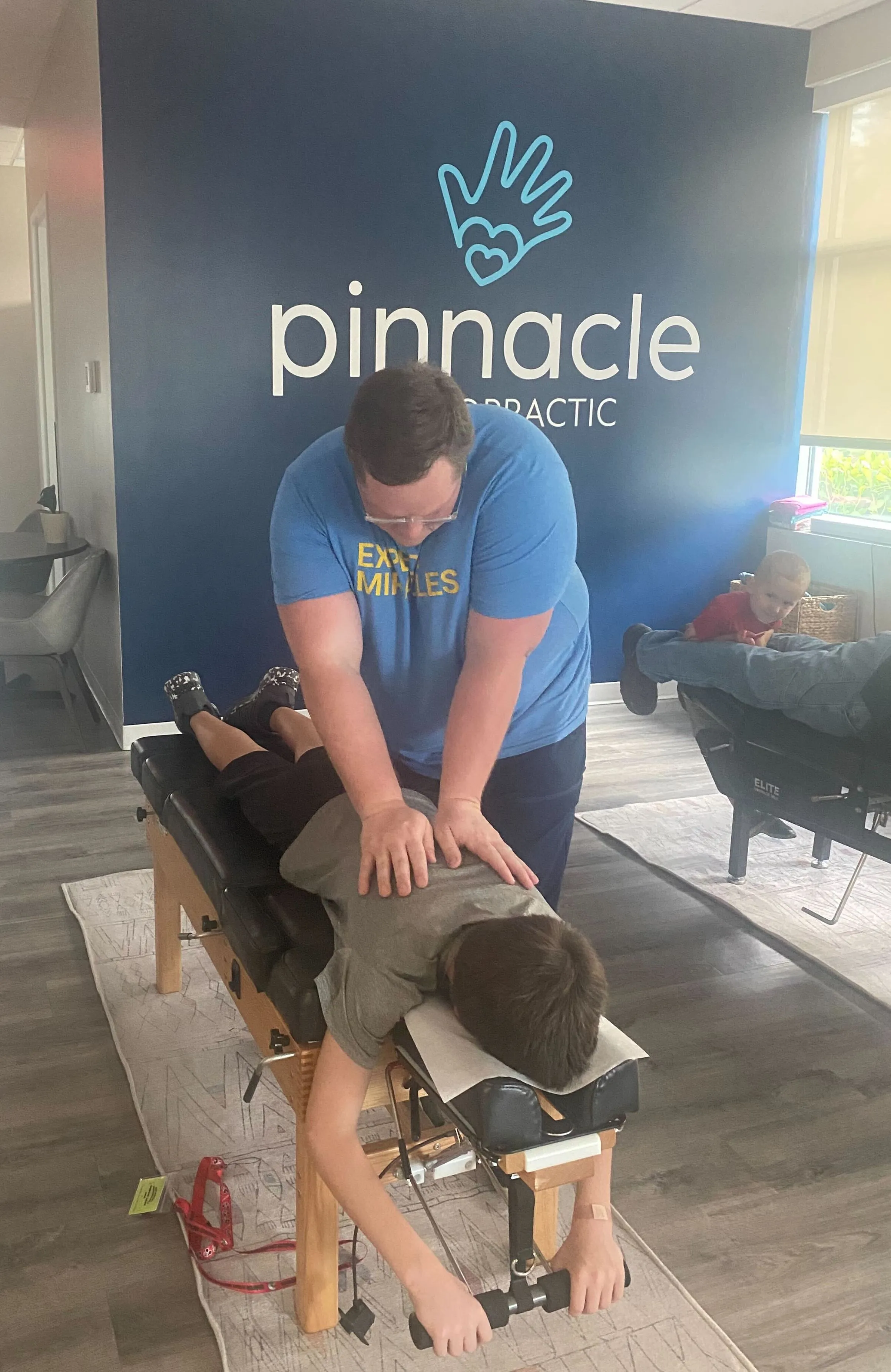
Infant chiropractic care is very gentle and different from adult adjustments. The pressure used is often compared to the pressure you would use to check the ripeness of a tomato. At Pinnacle Chiropractic, we start with a nervous system evaluation using objective INSiGHT scans, because we measure, we don't guess. Our goal is to support your baby's nervous system function and comfort in movement, always alongside your pediatrician's guidance. We do not claim that adjustments treat or cure any condition.
For older children, our article on chiropractic care for balance and coordination in children shows how early movement skills continue to matter as kids grow.
What Parents Can Do
• Begin with short sessions right from the early days, always supervised and while your baby is awake.
• Build in tummy time after diaper changes so it becomes a natural part of your routine.
• Limit long stretches in car seats, swings, and bouncers when you are not traveling.
• Celebrate small wins, such as a few seconds of head lifting.
• Always place your baby on their back to sleep, and use tummy time only when awake and watched.
FAQs
When should I start tummy time?
Many parents begin in the first days or weeks at home, starting with a minute or two. Check with your pediatrician for guidance that fits your baby.
How long should tummy time last?
Short sessions of a few minutes, repeated through the day, are a common approach, building up as your baby grows stronger and more comfortable.
My baby cries every time. Is that normal?
It is very common, especially early on. Shorter sessions, chest-to-chest time, and changing the setup often help, and persistent concerns are worth discussing with your pediatrician.
Can I do tummy time after feeding?
Waiting a little while after a feeding can reduce spit-up and discomfort. Many parents choose a time when their baby is rested and calm.
Does skipping tummy time cause delays?
Not necessarily, but regular practice supports the strength and movement variety babies need. If you have concerns about your baby's development, talk with your pediatrician.
Can infant chiropractic care help with tummy time struggles?
Infant chiropractic care is designed to support nervous system function and comfort, and some parents notice their baby moves more comfortably afterward. It works alongside, not in place of, your pediatrician's care and good daily practice.
Final Thoughts
Tummy time is simple, free, and one of the best foundations you can give a growing baby, even when it takes patience and creativity. Small, frequent sessions, a supportive setup, and plenty of encouragement go a long way.
If you have questions about your baby's movement, comfort, or development, Pinnacle Chiropractic is here to help you understand what may be going on. Our neurologically focused approach uses objective INSiGHT scans and gentle infant chiropractic care designed specifically for little ones. Contact Pinnacle Chiropractic to schedule a consultation.



.webp)
.webp)