Separation Anxiety in Toddlers: What's Normal, and What's Not — A Sarasota Parent Guide
The tears at daycare drop-off, the toddler clinging to your leg, the meltdown the second you walk toward the door — separation anxiety is one of the most universal, and most exhausting, phases of early childhood. At Pinnacle Chiropractic, we hear from families in Sarasota, Lakewood Ranch, Bradenton, and Parrish who want to know two things: is this normal, and is there anything that actually helps? The answer to the first question is almost always yes — separation anxiety is a sign of healthy attachment, not a problem to fix. The second question is where understanding your child's nervous system makes a real difference.
This guide covers what typical separation anxiety looks like at different ages, the signs that suggest something more is going on, how nervous system regulation factors into how a child handles being apart from a parent, and what parents in Sarasota, Lakewood Ranch, Bradenton, and Parrish can do to help.
Key Summary
• Separation anxiety is a normal, healthy part of development that typically appears between 9 and 18 months of age and fades naturally by preschool age for most children.
• It reflects healthy attachment, not a parenting problem — a baby or toddler protesting separation is showing you that your relationship matters to them.
• At Pinnacle Chiropractic, we connect how a child handles separation to how well their nervous system is regulating stress overall — a more regulated nervous system tends to recover from separation-related distress more quickly.
• Signs it may be more than typical separation anxiety include excessive distress that doesn't improve with time, physical complaints like stomachaches before separations, panic-level reactions, or anxiety persisting strongly into school age.
• Gentle pediatric chiropractic adjustments are designed to support healthy nervous system regulation, which plays a role in how a child's body and emotions recover from the stress of separation.
• If separation anxiety is significantly interfering with school, sleep, or daily life, talk with your pediatrician, who can help determine whether further support from a mental health professional makes sense.
What Is Separation Anxiety, and When Is It Normal?
Separation anxiety is the distress a baby or young child feels when a parent or primary caregiver leaves, or even when a separation seems like it might happen. It usually shows up first around 9 months, often peaks somewhere between 12 and 18 months, and gradually eases as children move through the toddler and preschool years. Some children have a milder version, some have big, dramatic reactions — both are within the range of normal.
This phase exists because your child has formed a genuine attachment to you, and their brain hasn't yet developed the ability to fully understand that you're coming back, or to manage the wait comfortably. As language, memory, and a sense of time develop over the next couple of years, most children become able to handle brief separations with far less distress.
What Typical Separation Anxiety Looks Like by Age
• 9–18 months: Crying or fussing when a parent leaves the room, clinginess around unfamiliar people, distress at daycare or babysitter drop-off.
• 18 months–3 years: Continued protest at separations, though often shorter-lived once the parent is actually out of sight; renewed anxiety around transitions like starting daycare or preschool.
• 3–5 years: Generally fewer and milder episodes, though big changes — a new sibling, a move, starting a new school — can bring a temporary resurgence.
• School age: Most children have outgrown regular separation distress by now; ongoing, significant separation anxiety at this age is less typical and worth a closer look.
Signs It May Be More Than Typical Separation Anxiety
A small percentage of children continue to experience significant separation anxiety well past the age when it typically fades — sometimes described as separation anxiety disorder when it becomes persistent and disruptive. Signs worth discussing with your pediatrician include:
• Excessive, ongoing distress around separations that doesn't improve with time or repeated exposure
• Persistent worry that something bad will happen to a parent or caregiver while apart
• Reluctance or refusal to attend school, sleep alone, or be in another room by themselves
• Physical complaints — stomachaches, headaches, nausea — that consistently show up before anticipated separations
• Panic attacks or extreme tantrums specifically tied to separation
• Significant interference with school attendance, sleep, friendships, or family routines
• Symptoms that continue or intensify well into elementary school rather than easing with age
None of these signs on their own mean something is seriously wrong, but a pattern of several together, especially at school age, is worth bringing to your pediatrician. They can help determine whether the anxiety has moved beyond a normal developmental phase and whether a referral to a child mental health professional would help.
What Parents Can Do
• Have your child evaluated by a pediatric chiropractor, especially if separation-related distress seems intense or your child seems to carry a lot of general nervous system stress — supporting regulation is often a meaningful piece of the puzzle.
• Practice short separations in low-stakes situations to help your child build confidence that you always come back.
• Keep goodbyes brief and consistent rather than lingering, which can unintentionally prolong distress.
• Build a predictable goodbye routine — a specific phrase, hug, or wave — so your child knows what to expect.
• Stay calm and matter-of-fact during drop-offs, even if your child is upset; children often take cues from a caregiver's own composure.
• Acknowledge their feelings without over-explaining or dwelling on the separation itself.
• Talk to your pediatrician if anxiety is intense, persistent, or interfering with school, sleep, or daily routines, especially at school age.
The Nervous System Connection
A child's response to separation is closely tied to their overall stress response — the same fight-or-flight system that governs how the body reacts to any perceived threat. A child whose nervous system is already carrying tension or stress tends to have a harder time calming back down once a stressful moment, like separation, has passed. At Pinnacle Chiropractic, we look at how well a child's nervous system is able to shift out of that stress response and back into a calm, regulated state — a process closely tied to overall nervous system function. Supporting that regulation doesn't erase the developmental phase of separation anxiety, but it may help a child's body recover more comfortably from the stress it brings.
How Pinnacle Chiropractic Approaches This
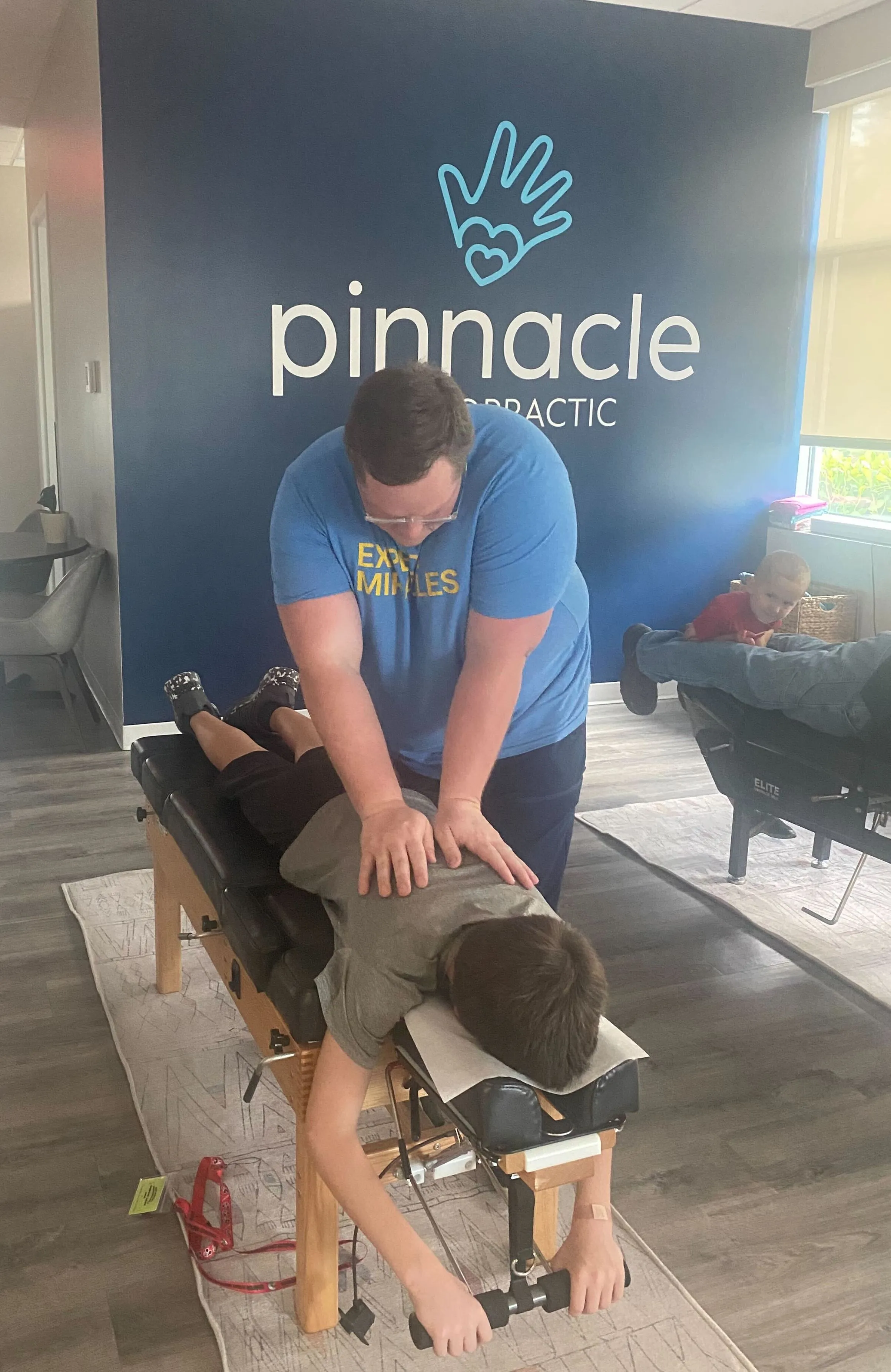
At Pinnacle Chiropractic, we take a neurologically focused approach to pediatric chiropractic care. Using INSiGHT scans, including HRV (autonomic nervous system adaptability) and surface EMG (patterns of muscular tension tied to nervous system stress), we look directly at how well a child's nervous system is regulating stress — we measure, we don't guess. Gentle chiropractic adjustments are designed to support healthy nervous system function, helping a child's body move more easily between stress and calm.
For significant, persistent separation anxiety — especially the kind that's disrupting school or daily life — chiropractic care works best as a complement to your pediatrician's guidance and, when appropriate, support from a child mental health professional, not a replacement for either.
Frequently Asked Questions
At what age is separation anxiety most intense?
It typically peaks somewhere between 12 and 18 months, though the exact timing and intensity vary quite a bit from child to child.
Is separation anxiety a sign I'm doing something wrong as a parent?
No. Separation anxiety is a sign of healthy attachment — your child protests separation because your relationship matters to them, not because of anything you're doing wrong.
Can chiropractic care help with separation anxiety?
Gentle pediatric chiropractic adjustments are designed to support healthy nervous system regulation, which plays a role in how a child's body recovers from the stress separation can bring. It's a complement to, not a substitute for, your pediatrician's guidance, especially for significant or persistent anxiety.
When should separation anxiety worry me?
If it's excessive, isn't improving over time, comes with physical complaints or panic-level reactions, or continues strongly into school age, it's worth discussing with your pediatrician.
Will my child grow out of separation anxiety on their own?
Most children do, typically by preschool age, as language, memory, and a sense of time develop. A smaller number continue to experience significant separation anxiety longer, which is why persistent, disruptive symptoms are worth mentioning to your pediatrician.
Does starting daycare or preschool make separation anxiety worse?
It's common for separation anxiety to resurface or intensify temporarily around a new transition like starting daycare or preschool, even in a child who seemed to be past the phase. This is a normal, usually short-lived response to a big change.
What's the difference between separation anxiety and separation anxiety disorder?
Typical separation anxiety is a normal developmental phase that eases with age. Separation anxiety disorder describes anxiety that is excessive for a child's age, persists well past the age when it typically fades, and significantly interferes with daily life — this distinction is made by a healthcare or mental health professional, not by symptoms alone.
Final Thoughts
Separation anxiety is one of the clearest signs that your child has formed a real, healthy attachment to you — even when it doesn't feel that way at 7:45 a.m. during a daycare drop-off meltdown. Knowing what's typical for your child's age, watching for the signs that suggest something more, and supporting your child's nervous system regulation can help both of you get through this phase with a little more ease.
If your child is struggling with separation anxiety, emotional regulation, or other signs of nervous system stress, Pinnacle Chiropractic can help you better understand what may be contributing to it and support their comfort directly. Our neurologically focused approach uses objective INSiGHT scans and gentle chiropractic adjustments designed specifically for children. Pinnacle Chiropractic proudly serves families throughout Sarasota, Lakewood Ranch, Bradenton, and Parrish — contact us to schedule a consultation.



.webp)
.webp)