


Chronic Headaches and Migraines in Children: Causes, Signs, and How Chiropractic Care Can Help
It's unsettling as a parent to hear your child say their head hurts — especially when it happens again and again. Chronic headaches and migraines in children are more common than many parents realize, and they can come from a range of contributing factors: stress, sleep, posture, diet, and how well the nervous system is regulating and adapting to daily demands.
At Pinnacle Chiropractic, we look at recurring headaches in children through a nervous system lens. Gentle pediatric chiropractic adjustments are designed to support nervous system regulation and reduce tension through the neck and upper spine — both of which play a role in how often and how intensely headaches show up for some kids.
This article covers what's behind chronic headaches and migraines in children, what to watch for, and how a chiropractic approach fits alongside your pediatrician's guidance.
Key Summary
• Chronic headaches and migraines affect a meaningful percentage of school-age children and teens, not just adults.
• Common contributing factors include neck and upper spine tension, poor posture (including from screen time), sleep disruption, stress, and diet.
• The nervous system plays a central role in headache and migraine patterns, since it regulates blood flow, muscle tension, and the body's stress response.
• Persistent, severe, or unusual headaches (especially with other symptoms) should always be evaluated by your pediatrician first.
• Pediatric chiropractic adjustments are designed to support nervous system regulation and reduce contributing tension, and can be a helpful part of a broader approach to managing recurring headaches.
How Common Are Headaches in Children?
Headaches in children are far from rare. Many school-age kids experience occasional headaches, and a smaller but still significant number deal with recurring or chronic headaches, including migraines. Migraines in children can look a little different than they do in adults — sometimes shorter in duration, sometimes accompanied more by stomach discomfort than the head pain itself. Because headaches in kids are so often dismissed as "growing pains" or blamed solely on screen time, they can go unaddressed longer than they should.
Why This Matters
Recurring headaches can affect a child's sleep, mood, focus at school, and overall quality of life — not just the hours when the headache itself is present. Understanding what's contributing to the pattern, rather than only treating each individual headache as it comes, gives families a better chance at addressing the root of the issue.
Common Contributing Factors
Chronic headaches and migraines in children are rarely caused by just one thing. Some of the most common contributing factors we see include:
• Neck and upper spine tension — tightness or restricted movement in the cervical spine can refer pain into the head and is one of the most overlooked contributors to recurring headaches in kids.
• Posture — hours spent looking down at phones, tablets, and laptops (sometimes called "tech neck") can add ongoing strain to the neck and upper back.
• Sleep disruption — inconsistent or insufficient sleep is closely linked to headache frequency in children.
• Stress — school pressure, social stress, and major life changes can all contribute to headache patterns in kids, often through increased muscle tension and nervous system dysregulation.
• Diet and hydration — skipped meals, dehydration, and certain foods can act as triggers for some children.
• Nervous system regulation — the nervous system coordinates blood flow, muscle tension, and the body's response to stress, all of which are involved in headache and migraine patterns.
Signs Parents May Notice
• Recurring head pain, whether it's a dull ache or a more intense, throbbing pain.
• Sensitivity to light or sound during a headache episode.
• Nausea or stomach discomfort accompanying the headache (common in pediatric migraines).
• Neck or shoulder tightness before or during a headache.
• Headaches that seem to follow a pattern — after school, after screen time, or during periods of stress.
When to See Your Pediatrician First
Most childhood headaches aren't a sign of anything serious, but some warrant prompt medical evaluation. Talk with your pediatrician right away if your child has a sudden, severe headache unlike any before; a headache following a head injury; a headache with fever, stiff neck, vomiting, vision changes, weakness, confusion, or difficulty waking up; or headaches that are steadily increasing in frequency or severity. These signs need medical evaluation and aren't something pediatric chiropractic care is designed to diagnose or address on its own.
The Nervous System Connection
The nervous system plays a central role in headache and migraine patterns — it regulates blood vessel function, muscle tension, and how the body responds to stress, all of which are involved in how and when headaches occur. Tension in the upper spine and neck, in particular, sits close to nerve pathways connected to this regulation, which is part of why neck-related tension is such a common contributor to recurring headaches in children.
At Pinnacle Chiropractic, we use objective INSiGHT scans — thermography, surface EMG, and heart rate variability — to get a clear, measured picture of how a child's nervous system is functioning, rather than guessing. We measure, we don't guess. Some families ask us about magnesium as well; you can read more in our article on magnesium and children's headaches for more on that piece of the picture.
How Pinnacle Chiropractic Approaches Chronic Headaches
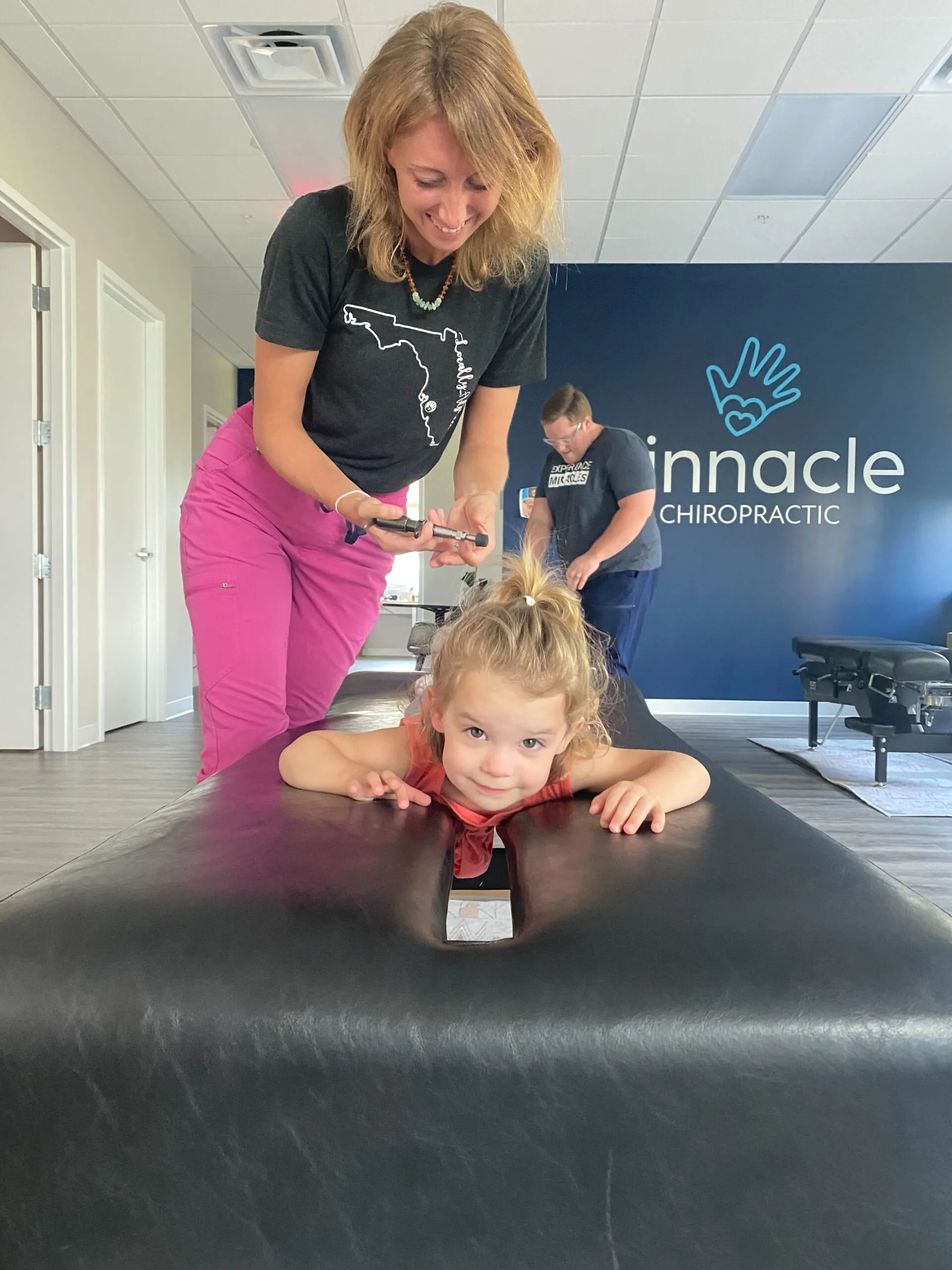
When a family comes to Pinnacle Chiropractic with a child dealing with recurring headaches or migraines, we start with a nervous system evaluation to objectively assess tension patterns and nervous system function. From there, we build a personalized care plan using gentle, age-appropriate pediatric chiropractic adjustments designed to help reduce tension through the neck and upper spine and support better nervous system regulation. Many Lakewood Ranch, Sarasota, and Bradenton families pair this with the everyday habit changes below as part of a broader approach to managing headaches.
What Parents Can Do
• Keep a simple headache log — when it happens, how long it lasts, and what was going on beforehand — to help spot patterns.
• Prioritize consistent sleep and regular meals, both common headache triggers when disrupted.
• Build in regular breaks from screens, and check posture during homework or gaming sessions.
• Talk with your pediatrician about any headache pattern that's frequent, severe, or unusual.
• Consider a nervous system evaluation with a pediatric chiropractor to get an objective look at neck tension and nervous system function.
FAQs
Can kids really get migraines, not just regular headaches?
Yes. Migraines in children are more common than many parents realize, and they can present a little differently than in adults — sometimes with more stomach discomfort and shorter duration.
What causes recurring headaches in children?
Common contributing factors include neck and upper spine tension, posture (including from screen time), sleep disruption, stress, diet and hydration, and how the nervous system is regulating the body's stress response.
Can chiropractic care help with my child's headaches?
Gentle pediatric chiropractic adjustments are designed to support nervous system regulation and reduce tension in the neck and upper spine, both of which play a role in headache patterns for many kids. It works best alongside your pediatrician's guidance, not as a replacement for it.
When should I take my child's headache seriously?
Seek prompt medical care for a sudden severe headache, a headache after a head injury, or a headache with fever, stiff neck, vomiting, vision changes, weakness, or confusion. These need medical evaluation right away.
What happens during a pediatric chiropractic visit for headaches?
At Pinnacle Chiropractic, we start with INSiGHT neurological scans to objectively assess nervous system function and tension patterns, then build a personalized, gentle care plan based on those results.
Final Thoughts
Chronic headaches and migraines in children can have real, identifiable contributing factors — many of them tied to nervous system regulation and tension in the neck and upper spine. Understanding those factors, alongside your pediatrician's guidance for anything urgent or unusual, gives families a fuller picture of what's going on and what can help.
If your child deals with recurring headaches, Pinnacle Chiropractic can help you better understand what may be contributing to it. Our neurologically focused approach uses objective INSiGHT scans and gentle pediatric chiropractic adjustments designed specifically for children. Contact Pinnacle Chiropractic to schedule a consultation.



.webp)
.webp)